

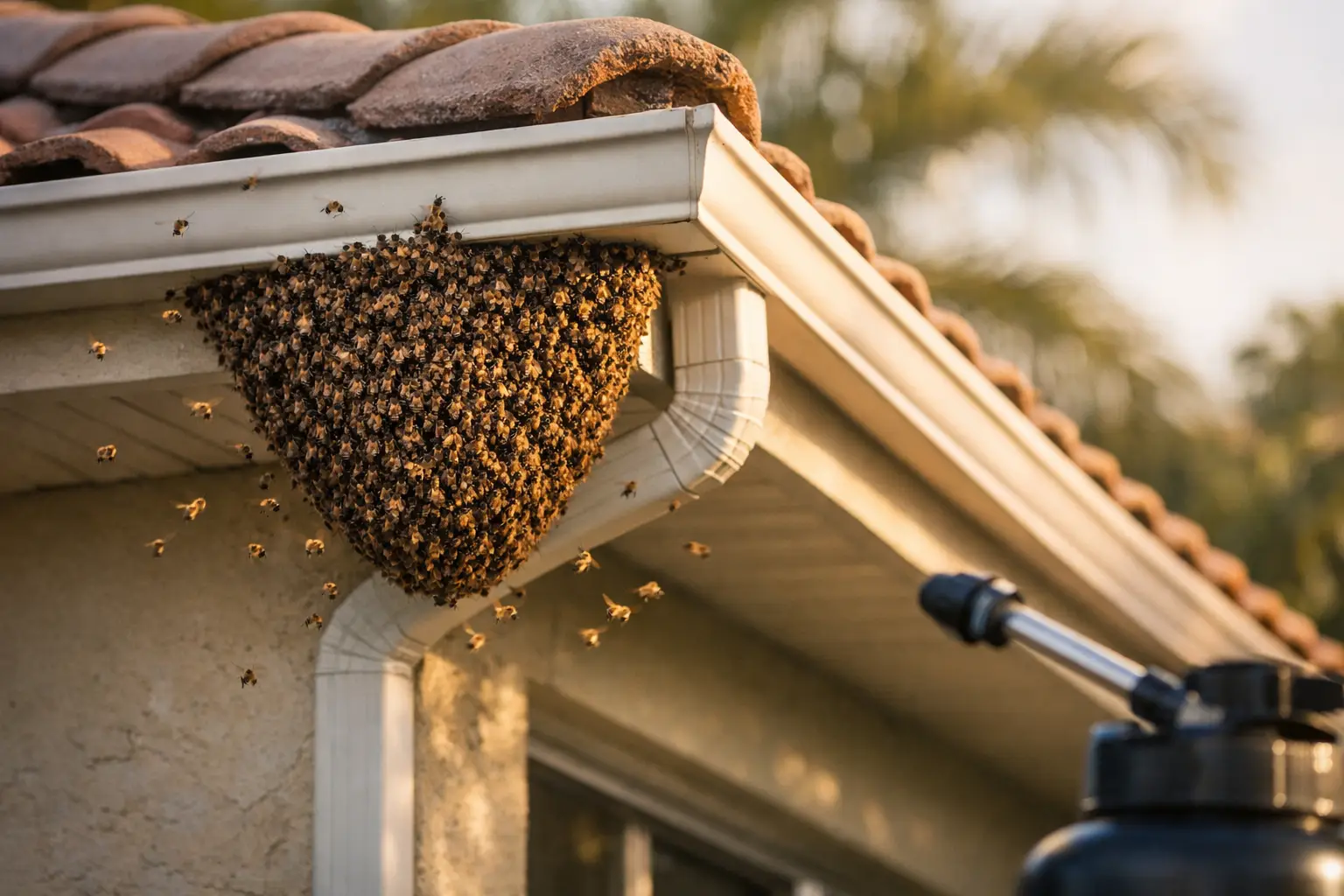

A bee colony in a soffit, wall, or roofline creates two urgent concerns at once: people need to be safe, and the structure needs to be protected. The beekeeper versus exterminator decision is not simply about whether you like bees. It is about identifying the insect correctly, understanding what is inside the building, and choosing a response that does not leave honey, wax, or surviving bees behind.
For honey bees, live removal and relocation are often the most complete solution. For certain stinging insects or immediate hazards, a licensed pest-control professional may be the right call. The details matter, particularly in Southwest Florida, where colonies can establish quickly in warm, protected voids.
Beekeeper Versus Exterminator: The Core Difference
An exterminator’s primary job is to control or eliminate pests that threaten health, safety, or property. That approach can be appropriate for insects such as yellowjackets, hornets, and some wasps. These species do not produce stored honey in the same way honey bees do, and their nests are usually seasonal. Treatment may remove the immediate hazard without creating a long-term structural cleanup project.
A beekeeper who performs live bee removal approaches a honey bee colony differently. The goal is to remove the living colony, including the queen, workers, comb, brood, honey, and accessible wax, then relocate the bees to a managed apiary. This recognizes honey bees as valuable agricultural livestock and pollinators while addressing the homeowner’s immediate concern.
The difference becomes especially significant when bees are living inside a structure. Killing a colony in a wall can stop flight activity temporarily, but the comb and honey may remain. In Florida heat, that leftover material can melt, ferment, stain ceilings or drywall, attract ants and roaches, and draw new bees to the same scent-rich cavity.
First, Confirm What You Are Seeing
Not every buzzing insect is a honey bee. A swarm of honey bees often looks like a moving cloud that settles into a temporary cluster on a branch, fence, vehicle, or exterior wall. Swarming bees are usually focused on finding a new home, not defending an established nest. They still deserve respectful distance, but a trained live-removal specialist can often collect and relocate them without opening a structure.
An established honey bee colony has regular traffic. You may see bees entering and leaving one gap in a soffit, block wall, roofline, utility box, or tree cavity throughout the day. The entrance may be small, while the colony behind it has occupied a large hidden space for months or years.
Wasps, yellowjackets, and hornets have narrower bodies and less fuzzy appearances than honey bees. Their nests may be exposed paper structures, underground cavities, or small sheltered spaces. Do not rely solely on an online photo when people, pets, customers, or residents are nearby. Getting the identification right prevents an unnecessary chemical treatment and helps the right professional arrive with the right equipment.
When a Beekeeper Is Usually the Better Call
A qualified live bee-removal provider is generally the best first option when you have confirmed honey bees, especially if they are inside a building. Structural removal is not just bee collection. It is a controlled process intended to solve the source of the problem.
The technician first evaluates flight patterns and possible entry points to determine where the colony is located. Access to the cavity may require carefully opening a section of soffit, siding, roof material, or wall. The team removes the bees and comb, secures the queen when possible, and collects honey and brood material that could otherwise decay or attract pests.
After the colony is out, the cavity should be cleaned and closed appropriately. Excluding future bees matters as much as removing the existing colony. Honey bees can locate residual wax and honey odors, and a neglected entry point is an invitation for another swarm.
Live removal is particularly valuable for homeowners who want to protect their property without treating pollinators as disposable pests. It also gives commercial property managers and HOAs a defensible, practical response: resolve the bee issue, reduce the chance of residue-related damage, and restore a safer environment around employees, residents, and visitors.
At Beeswild, relocated colonies are rehomed in managed farm areas rather than simply moved to another neighborhood. For qualifying same-place removals, the company also provides a three-month warranty, which reflects the fact that lasting removal depends on correcting the entry point and conditions that allowed the colony to establish.
When an Exterminator May Be the Right Choice
There are situations where pest control is appropriate. If the insects are yellowjackets, paper wasps, hornets, or another non-honey-bee species, an exterminator may provide the most direct and safe treatment. A qualified provider can assess the species, nesting location, exposure risk, and whether removal or treatment is necessary.
Immediate safety changes the decision as well. If a colony or nest is actively attacking, someone has been stung repeatedly, or a person with a known severe allergy is exposed, move people and pets away from the area and seek urgent professional help. Do not block the entrance, spray the insects, hit the nest, or attempt to seal bees into a wall. Those actions can provoke defensive behavior and may force bees farther into the structure.
In Southwest Florida, concerns about highly defensive honey bee colonies should be taken seriously. Behavior can vary widely, and visual identification alone cannot reliably determine how defensive a colony may be. A trained bee-removal professional uses protective equipment, works methodically, and evaluates the situation before starting removal. The safest choice is not always the fastest-looking choice.
Why Poisoning a Wall Colony Often Creates a Second Problem
Chemical treatment may appear less expensive than structural removal because it can involve less labor on the day of service. But the initial price does not always represent the full cost. A dead colony can leave pounds of comb and honey in a hot enclosed cavity, where cleanup becomes harder after leakage, staining, pests, or odor develops.
There is also the issue of reinfestation. If comb remains and the access point is not sealed, scout bees may find the location later. Homeowners can end up paying for a treatment, cleanup, repairs, and another bee response when a complete removal would have addressed the cavity from the start.
That does not mean every bee situation requires opening a wall. A temporary swarm on a reachable branch is very different from a mature colony behind stucco. The right scope depends on the species, location, size of the colony, building materials, access, and safety conditions. A trustworthy provider explains those trade-offs before work begins.
Questions to Ask Before You Hire Anyone
Whether you call a beekeeper or exterminator, ask what insect has been identified and what will happen after the insects are gone. For a honey bee colony in a structure, the answer should address the comb, honey, cleanup, and exclusion, not only the visible bees.
Ask whether the provider is experienced with structural removals, carries appropriate insurance, and can explain what materials may need to be opened or repaired. Find out whether the quoted work includes removal of comb and honey, sealing the entry point, and a warranty for activity returning to the same area. Clear answers are especially important for property managers, HOAs, and businesses that need to document how a public-safety concern was handled.
Be cautious of anyone who promises to solve a hidden colony by spraying the entrance and leaving. That may be a pest-control treatment, but it is not a full honey bee removal plan. The distinction can save substantial frustration later.
Protect People Without Treating Bees as Disposable
A honey bee colony beside a doorway, playground, patio, or outdoor dining area should not be ignored. People deserve a safe property, and a building deserves protection from moisture, honey, pests, and repeated nesting. Humane removal does not mean delaying action. It means taking action that accounts for the biology of the colony and the condition of the structure.
Keep a safe distance, keep children and pets away from the flight path, and avoid using household sprays or improvised remedies. Then choose a professional based on the insect involved and the complete outcome you need. The best call is the one that leaves your property safer, your building cavity clean, and a healthy honey bee colony with a place to go.

No responses yet