

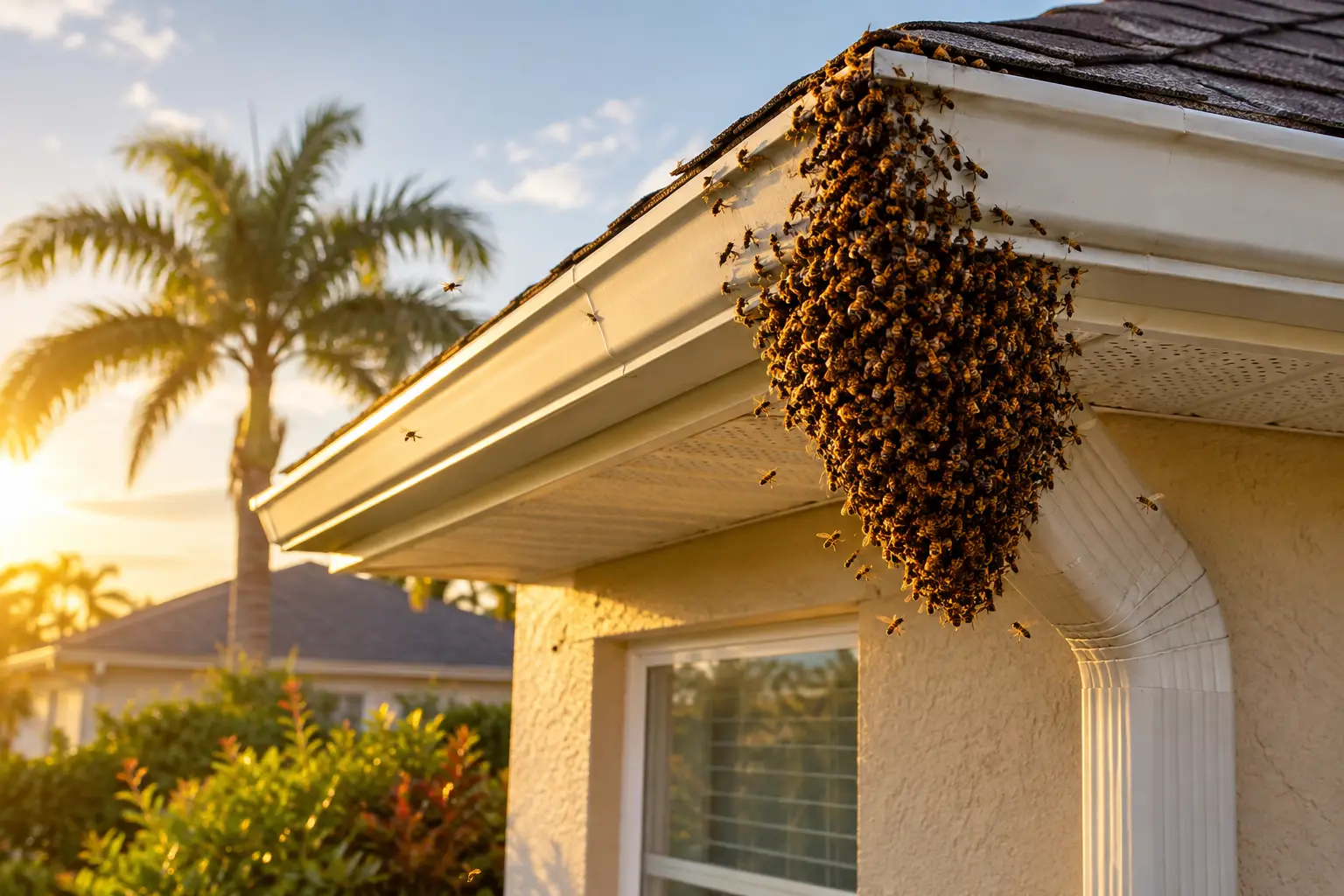

A bee colony above a restaurant patio or behind a shopping-center soffit is not a routine maintenance ticket. It can affect customer safety, employee confidence, tenant operations, and the condition of the building itself. This commercial guide to bee safety explains how property managers, HOA boards, and facility teams can respond without treating pollinators as disposable pests.
The key distinction is between a temporary swarm and an established colony. A swarm may pause on a tree branch, signpost, or exterior wall while scout bees search for a permanent home. An established colony has moved into a void or protected space and is building comb, storing honey, and raising brood. The second situation requires a more complete response because the bees are only one part of the problem. Comb and honey left inside a wall can melt, ferment, stain finishes, attract ants and other pests, and create an opening for another colony to move in.
Commercial Guide to Bee Safety: Start With Assessment
A calm assessment protects people and prevents an expensive wrong decision. Keep staff, customers, vendors, and maintenance crews away from the activity area. If the bees are near a doorway, outdoor dining area, playground, pool deck, parking-pay station, or work entrance, establish a temporary alternate path when practical. Avoid sending an employee up a ladder or asking grounds staff to spray an insecticide.
Document the location from a safe distance. Note where bees enter and exit, how high the activity is, whether the activity continues through the day, and whether people have already been stung. A steady flight path into a roofline, wall cavity, utility enclosure, or irrigation box usually suggests an established colony. A clustered mass of bees in an exposed spot may be a swarm, but it still deserves professional evaluation before anyone approaches it.
In Southwest Florida, managers should take reports of defensive behavior seriously. Honey bees can become highly protective when a colony is disturbed, particularly near an entrance or nesting cavity. Do not attempt to identify whether bees are Africanized based on appearance. That is not a reliable field judgment for a property team. Treat unusually defensive activity as a safety concern, restrict access, and arrange qualified removal.
Separate immediate hazards from normal bee activity
Not every bee sighting requires an emergency response. Bees visiting flowering landscaping are performing normal pollination and generally do not need intervention. The risk changes when bees are nesting in a structure, gathering around a public access point, or reacting to vibrations from mowers, pressure washers, roof work, or construction.
An immediate response is warranted when bees are entering occupied structures, blocking an essential entrance, repeatedly stinging people or pets, or clustering near areas where visitors cannot reasonably keep their distance. In those cases, stop nearby work and keep the area quiet. Loud equipment, impacts on the wall, and attempts to block the entrance can provoke a colony.
Build a Site Response Plan Before an Incident
Commercial bee safety is easier when the decision-making is not improvised during a complaint call. Property managers should designate who can approve a removal, who communicates with tenants, and who can authorize temporary closures or signage. For a multi-tenant property, that may involve the manager, facilities lead, security team, and one point of contact for each affected business.
Your plan should also make room for the difference between a visible swarm and a hidden colony. A swarm may be collected with limited disruption. A colony inside a wall, roof, soffit, or chimney often requires access to the cavity, removal of bees and comb, cleanup of honey residue, and proper closure of the entry point. The least expensive quote is not always the lowest-cost outcome if it leaves comb in place or does not address re-entry.
Clear tenant communication matters. Explain what is known, what areas are temporarily restricted, and when the next update will be provided. Avoid statements that minimize the issue or promise an exact completion time before the colony is assessed. A short, factual notice is usually enough: a bee colony is being evaluated, the affected area is closed for safety, and visitors should use the marked alternate route.
Prepare for allergic reactions without causing panic
A sting can be medically serious for a person with a known allergy, and commercial sites should follow their established emergency procedures when someone shows signs of a severe reaction. Difficulty breathing, swelling of the face or throat, widespread hives, dizziness, or loss of consciousness require emergency medical attention.
For most property teams, the practical role is prevention: keep people away from the colony, ensure staff know how to call emergency services, and avoid crowding the scene. Employees should not be expected to capture bees, remove stingers from strangers, or decide whether a reaction is severe. A calm handoff to medical professionals is safer than an untrained response.
Why Humane Structural Removal Protects the Property
When bees occupy a building, poisoning them can appear quick. It often creates a second maintenance problem. Dead bees, brood, wax, and honey remain in the cavity. In Florida heat, honey can soften and leak through drywall, ceilings, or exterior finishes. The odor and residue can attract ants, roaches, wax moths, rodents, and future bee activity.
Humane live removal addresses the colony as a living system and a structural issue. The process generally involves locating the nest, carefully accessing the cavity, removing bees and comb, collecting as much honey residue as conditions allow, and closing the original entry route after the space is suitable for repair. The colony can then be relocated to an apiary rather than destroyed.
The work is not always invisible. Access may require opening a section of soffit, siding, roof material, or interior wall. That trade-off should be discussed upfront. Controlled access and repair are often preferable to leaving a hidden food source and nesting site inside the building. A professional provider should explain the proposed access point, what cleanup is included, who completes finish repairs, and how return activity will be handled.
Beeswild uses this approach by relocating viable colonies to safe farm areas rather than treating removal as a one-time extermination event. For commercial clients, that approach aligns public safety with long-term building protection.
Prevention Means Closing the Invitation
After removal, prevention is not about sealing every opening in a building without thought. Structures need appropriate ventilation and drainage. The goal is to identify bee-sized entry points that lead to protected voids and address them as part of proper building maintenance.
Inspect aging soffits, fascia transitions, roof penetrations, utility openings, gaps around conduits, and uncapped hollow features. Damaged screens and loose trim deserve attention, especially when they connect to a quiet cavity. Schedule this work after the colony has been removed, not while bees are actively using the entrance. Closing an active entrance can trap bees inside and drive them into occupied spaces.
Landscaping also deserves a measured approach. Do not remove all flowering plants simply because a colony was found nearby. Pollinator-friendly landscaping is beneficial when it is maintained away from crowded entrances, outdoor dining, school pickup routes, and high-traffic play areas. Where possible, place highly attractive flowering plants farther from pedestrian choke points and keep irrigation leaks from creating persistent water sources near public doors.
Questions That Prevent Incomplete Removal
Before authorizing service, commercial decision-makers should ask how the provider will determine whether the bees are a swarm or an established colony, whether comb and honey will be removed, and what areas of the building may need to be opened. They should also ask who is responsible for closing entry points and completing cosmetic repairs.
Ask about return activity as well. Some foraging bees may return briefly after a removal because they were away from the nest during the work. That is different from a new colony reoccupying an untreated cavity. A written scope and a clear same-location return policy help property managers distinguish between normal short-term activity and a problem requiring follow-up.
Avoid solutions that promise to solve a structural colony without inspection, access, or cleanup. A building cavity is not an outdoor nuisance nest. The quality of the work depends on understanding where the colony is, what remains behind, and how the structure will be protected afterward.
A well-managed bee incident lets a commercial property do two things at once: protect the people who use the site and preserve a pollinator colony whenever conditions allow. That is a practical standard for safer buildings, fewer repeat problems, and a healthier local environment.

No responses yet