

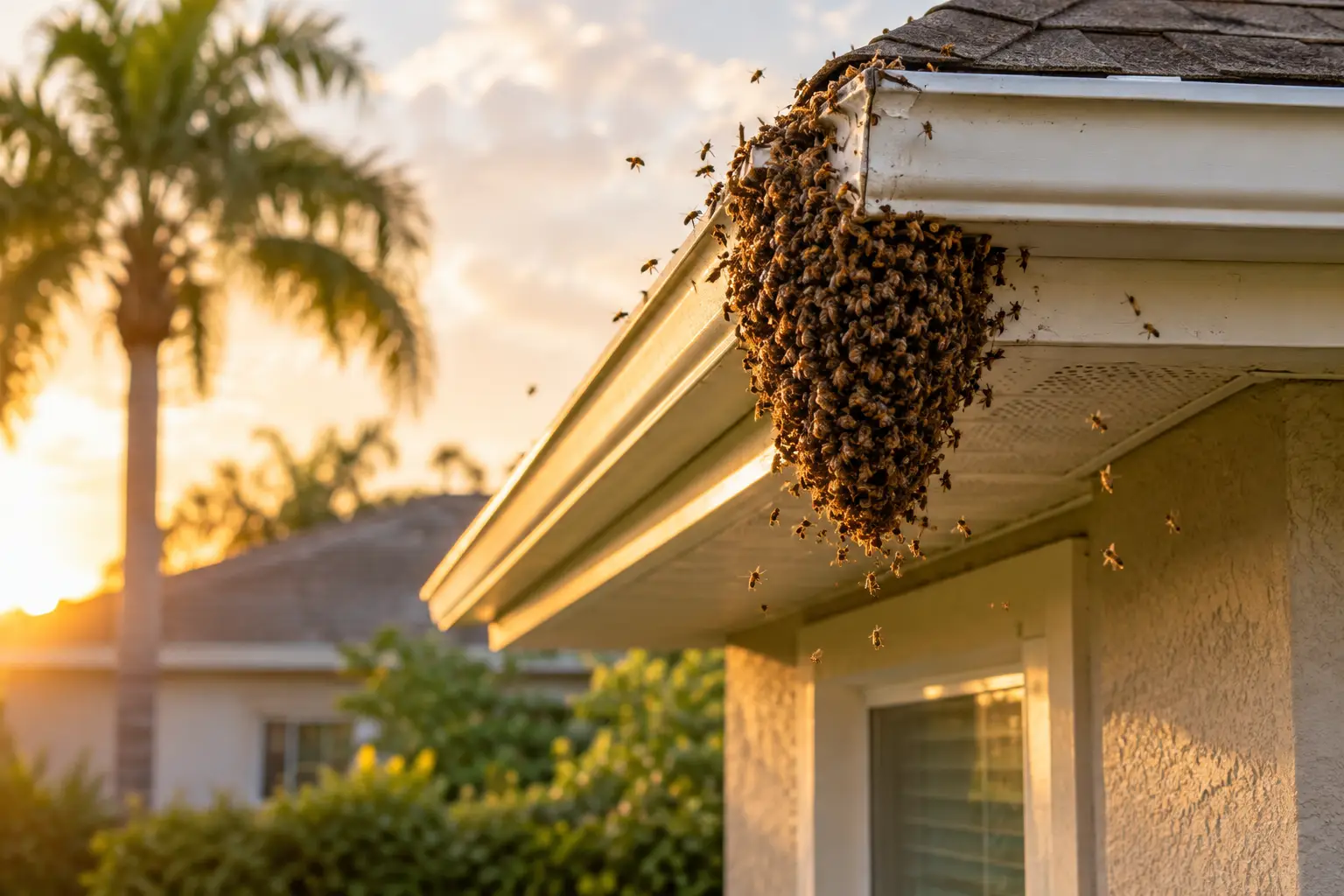

A school bee response should begin with calm observation, not a can of insecticide. A cluster of bees near a playground, classroom entrance, athletic field, or bus loop can make students and staff understandably nervous. But the right response protects people from stings, prevents costly building damage, and gives valuable pollinators a chance to be relocated rather than destroyed.
For schools, the goal is not to treat every bee sighting as an emergency. The goal is to identify the level of risk quickly, control access to the area, and bring in a qualified live bee removal professional when bees have settled into a structure or are behaving defensively.
What a School Bee Response Must Address
Bee reports on campus usually fall into two very different categories: a temporary swarm or an established colony. Knowing the difference helps administrators make safer decisions.
A swarm is a large group of honey bees gathered on a tree limb, fence, light pole, bench, or exterior wall. Swarms often appear suddenly in spring or after periods of warm weather. They are typically resting while scout bees search for a permanent nesting site. Although a swarm can look alarming, it is often less defensive than a colony because it has no honeycomb, brood, or stored honey to protect.
An established colony has moved into a cavity, such as a wall, roofline, soffit, utility box, shed, portable classroom, or playground structure. Bees may be seen entering and leaving the same opening throughout the day. This situation requires more than removing visible bees. Comb, honey, wax, and bees inside the structure must be addressed, or the problem can return through the same access point.
The location changes the urgency. Bees high in a tree away from student traffic may be monitored while a removal team is scheduled. Bees at a doorway, low branch, cafeteria patio, or active playground need immediate isolation. A colony inside a wall near classrooms also deserves prompt attention because vibration, mowing, construction, or accidental disturbance can trigger defensive behavior.
Immediate Steps for Staff and Administrators
The first person who sees bees should notify the front office, facilities staff, or the designated campus safety contact. Staff should not investigate closely, throw objects at the cluster, spray it, or ask students to take photos. Curiosity is natural, but crowding bees is one of the fastest ways to turn a manageable situation into a sting risk.
Secure the area by moving students and staff indoors or rerouting foot traffic. For a swarm near a playground, close that section of the grounds and use an alternate recess area. For bees near a building entrance, direct arrivals through another door if possible. A clear, temporary boundary is more effective than a dramatic response that causes panic.
If anyone has been stung repeatedly, shows trouble breathing, swelling of the face or throat, dizziness, widespread hives, or signs of an allergic reaction, follow the school’s medical emergency procedures immediately. Staff should also avoid attempting to brush large numbers of bees away from a person. Moving calmly into an enclosed building or vehicle is often safer than swatting.
School leaders should record the exact location, time reported, bee activity, and whether bees are entering a visible opening. A photo taken from a safe distance by trained facilities staff can help a removal professional evaluate the situation before arrival. Do not ask a student to obtain it.
Why Spraying Bees Creates a Bigger Campus Problem
Using pesticide on visible bees may seem fast, but it rarely solves a structural colony. If bees are living inside a wall or roof, poison can kill some workers while leaving honeycomb, larvae, wax, and food stores behind. The remaining material can melt in Florida heat, stain drywall, attract ants, cockroaches, beetles, and rodents, and create odors that are difficult to remove.
Killing bees at the entrance can also cause surviving bees to search for another route into the building. In some cases, a disturbed colony becomes more defensive, which increases risk for staff, students, and nearby neighbors.
A live removal approach focuses on locating the colony, carefully removing bees and comb, and closing the access point after the cavity has been cleaned. This approach takes more skill than a surface spray, but it addresses the source of the problem. It also supports the agricultural value of honey bees, which pollinate crops, gardens, and native plants.
When to Call a Professional Bee Removal Team
Schools should contact a qualified bee removal specialist when bees are entering a wall, roof, soffit, utility structure, or other enclosed space; when a swarm is in a high-traffic area; or when there are repeated reports of defensive bee behavior. A professional should also assess colonies near child care areas, outdoor dining spaces, athletic events, and disability access routes.
In Southwest Florida, it is wise to treat unusually defensive bee activity seriously. Honey bee behavior cannot be reliably judged from appearance alone. A trained professional can assess the site, recommend safe exclusion zones, and determine whether live removal is appropriate. If there is an immediate threat to people, follow local emergency guidance first.
Before authorizing work, school decision-makers should ask how the provider will remove the colony, whether comb and honey will be removed from the structure, how entry points will be sealed, and what warranty applies if bees return to the same location. These questions separate a complete structural removal from a short-term treatment.
Beeswild, for example, provides live bee removal and relocation in Southwest Florida and offers a three-month same-place removal warranty. Whatever provider a school chooses, the scope of work should clearly state who handles repairs to exterior materials, soffits, siding, or drywall after removal.
Communication Keeps a Bee Incident From Becoming a Panic Event
A concise message to staff and families can prevent rumors and keep people out of the restricted area. The message does not need alarming details. It should explain that a bee activity area has been secured, students are being supervised, and a qualified professional is handling removal or assessment.
Avoid language that labels every bee as aggressive or dangerous. That can create unnecessary fear and encourage harmful reactions the next time students see pollinators in a garden. At the same time, do not minimize a colony near people. The most reassuring communication is factual: the school identified the location, restricted access, and took appropriate action.
Teachers can use the moment as a short safety lesson. Students should understand that bees are beneficial insects, that they should give any cluster of bees space, and that they should tell an adult rather than touch, chase, or spray them. This lesson works best after the immediate area is safe and normal routines have resumed.
Prevention Starts With the Building Envelope
A thoughtful school bee response also looks beyond the current incident. Honey bees seek protected cavities, especially openings in fascia boards, gaps around pipes, damaged soffits, unsealed roof transitions, and voids around air-conditioning equipment. Preventive maintenance reduces the chance that a passing swarm will settle on campus.
Facilities teams should inspect buildings periodically for gaps larger than about one-eighth inch, damaged screens, missing vent covers, and repeated bee traffic. Sealing openings is most effective after a professional confirms there are no active bees inside. Closing an occupied colony into a wall can force bees into classrooms or other interior spaces, while trapped honey and comb remain behind.
Landscaping deserves a balanced approach. Schools do not need to remove flowering plants to prevent bee issues. Pollinator-friendly gardens can be valuable teaching spaces when they are placed away from busy entrances, playground equipment, lunch areas, and main pedestrian routes. Water features should also be monitored, since bees may visit reliable water sources during hot weather.
Build the Plan Before the Next Report
The best time to assign responsibilities is before bees appear near a school entrance. Identify who receives reports, who can close or reroute an area, who contacts the removal provider, and who communicates with families. Include the plan in facilities and campus safety procedures so a staff member is not making high-pressure decisions alone.
A calm response tells students something useful: public safety and environmental care can work together. When a school gives bees space, protects people, and removes established colonies correctly, it preserves both the learning environment and the living systems beyond the classroom walls.

No responses yet