
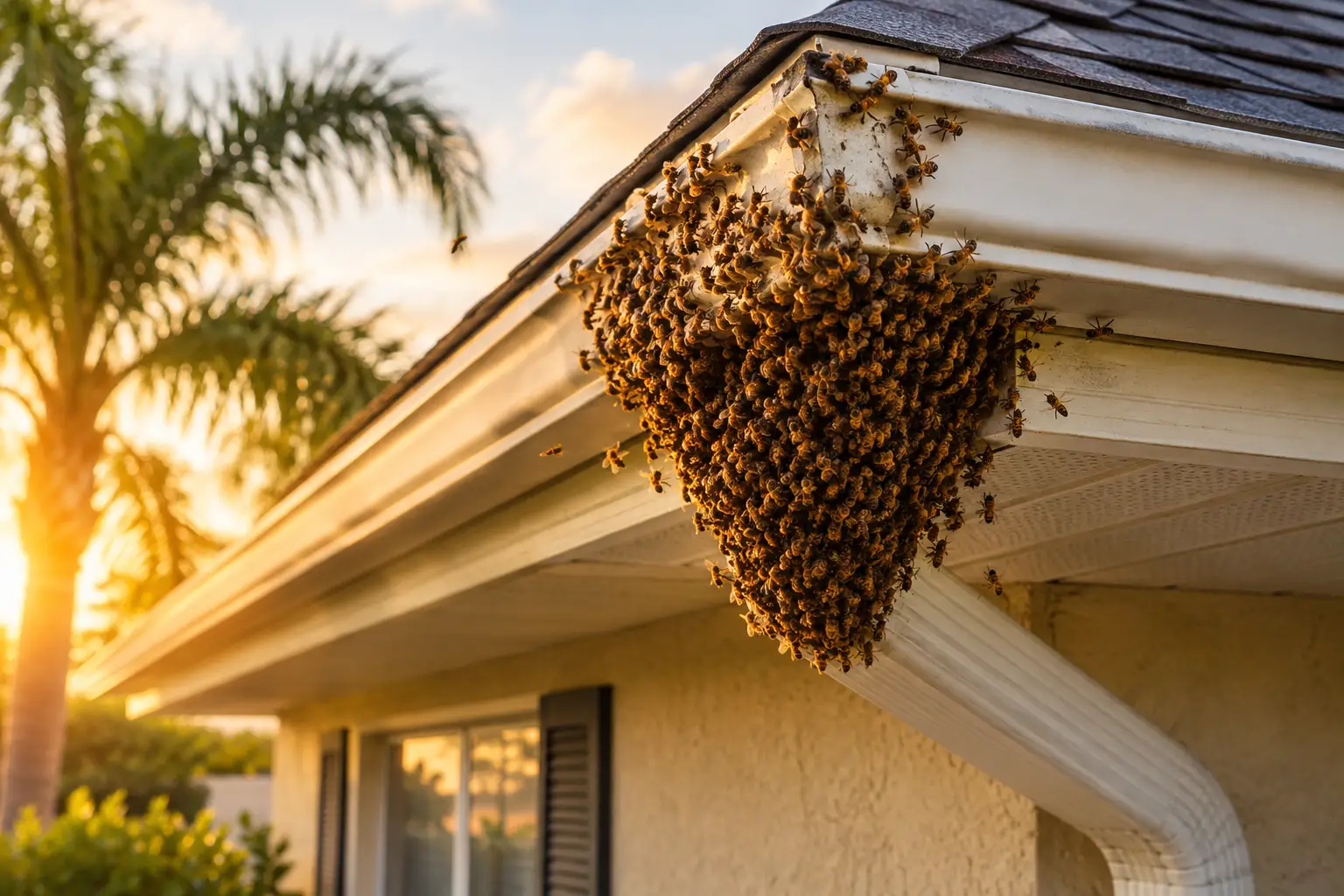

A steady stream of bees disappearing into a soffit, wall gap, or roofline is not a swarm that will simply move on. It is usually the start of a structural colony, and waiting can turn a small opening into a costly honey, wax, and pest problem. This guide to bee colony relocation explains what responsible removal involves, why it protects both people and pollinators, and when a property needs immediate professional attention.
What Bee Colony Relocation Actually Means
Live bee relocation is the physical removal of a honey bee colony from an unwanted location and its transfer to a managed apiary or another suitable home. Done correctly, it involves more than collecting visible bees. A colony includes a queen, adult bees, brood, comb, honey, pollen stores, and the scent markers that tell returning foragers where home is.
That distinction matters because spraying a visible cluster or blocking an entrance does not remove the colony inside. If the queen, comb, or honey remains in a wall, surviving bees may return, another swarm may occupy the cavity, and honey can leak into insulation or drywall. In Southwest Florida’s heat and humidity, leftover comb can also attract ants, wax moths, beetles, rodents, and other pests.
Humane removal addresses the whole colony. The beekeeper locates the occupied space, safely accesses it, removes the bees and comb, transfers the colony to a hive, and cleans the cavity before it is sealed. The goal is not merely to make bees disappear from view. It is to prevent the same location from becoming a bee problem again.
Swarm or Established Colony? The First Question to Answer
A swarm is a temporary cluster of bees, often hanging from a branch, fence, mailbox, or exterior wall. It forms when part of an existing colony leaves with a queen to find a new nesting site. Swarming bees can look alarming, but they are typically focused on protecting the queen and locating a home rather than defending honey stores.
An established colony has moved beyond that search stage. Bees repeatedly enter and exit a crack or opening, usually along a consistent flight path. You may hear buzzing through a wall, see wax or staining near a ceiling, or notice bees gathering around vents, eaves, water meters, sheds, or pool equipment. A colony can remain hidden for months while it builds comb and stores honey.
The response depends on which situation you have. A reachable swarm can often be collected with limited disruption. A colony inside a structure generally requires a more involved cut-out or carefully planned extraction. Treating both situations as a simple “bee spray” job creates unnecessary risk for the building and rarely solves the underlying issue.
Why Poison and Entrance Blocking Often Fail
Homeowners understandably want the activity stopped quickly, especially near children, pets, pools, walkways, or outdoor seating. But pesticides and sealants can create a second problem behind the wall.
When a colony is killed inside a cavity, honey and comb remain. In Florida, warm temperatures can soften honey and cause it to seep through ceilings, walls, or light fixtures. The odor may draw ants and other insects. Bees that were away foraging during treatment can return and search for alternate ways into the building, sometimes entering living spaces.
Blocking the entrance while bees are still inside is similarly unreliable. Trapped bees may chew through weak materials or find a different exit. If the queen and comb remain, the cavity can still attract future colonies. A permanent solution requires removal of the biological material that makes the location attractive: bees, comb, brood, honey, and old wax residue.
The Bee Colony Relocation Process
Every structure is different, so a responsible beekeeper starts with an inspection rather than promising a one-size-fits-all method. The exterior flight path helps identify the entry point, but it may not reveal the full size or direction of the colony. A colony entering through a small soffit gap, for example, may extend several feet across a wall or roof cavity.
Assessment and safety planning
The removal team considers bee behavior, colony location, access, building materials, and who uses the area. A colony near a school entrance, restaurant patio, or shared HOA walkway may need the area temporarily managed to reduce sting exposure. If bees are unusually defensive, professionals use appropriate protective equipment and a more controlled approach.
In Southwest Florida, colonies may include Africanized genetics, which can make defensive behavior harder to predict. That does not mean every active colony is aggressive, but it is a reason not to knock on a hive, spray it with a hose, or attempt removal without training. Keep people and pets away, and do not stand directly in the bees’ flight path.
Accessing and removing the colony
For an established colony, a technician may need to open a limited section of siding, soffit, roof material, or interior drywall to reach the comb. This is often the part property owners worry about most. Yet controlled access is generally less damaging than allowing honey to accumulate or leaving dead comb behind a sealed surface.
The comb is removed carefully and placed into frames or containers for transport. The queen is located when possible, and the adult bees are moved into a hive box. Brood comb is especially valuable because it helps the relocated colony remain organized and recover in its new home.
Cleaning, exclusion, and repair coordination
After the bees and comb are out, the cavity must be cleaned of wax and honey residue. This is a core part of preventing reinfestation. The opening is then sealed using materials appropriate for the structure, often after the property owner or a repair professional addresses any necessary restoration.
No exclusion work should trap live bees in the structure. The order matters: remove the colony first, clean the cavity, then close access points. Beeswild, for example, backs qualifying removals with a three-month same-place removal warranty, reflecting why complete removal and proper closure are more reliable than a quick surface treatment.
What Property Owners Should Do Before Help Arrives
The safest first move is to observe from a distance. Notice where bees are entering, how high the opening is, and whether activity is steady throughout the day. A photo or video taken safely from the ground can help a removal professional assess the situation, but do not climb ladders, remove panels, or place a camera close to the entrance.
Keep windows near the colony closed and move children, pets, and guests away from the area. Avoid lawn equipment, pressure washing, pruning, or loud vibration near the nest. These actions can provoke defensive bees, particularly when a colony is established in a confined structural space.
If someone has been stung repeatedly, develops trouble breathing, facial swelling, dizziness, widespread hives, or vomiting, seek emergency medical care immediately. For a single sting without severe symptoms, remove the stinger promptly by scraping it sideways with a flat edge, then wash the area and use a cold compress for swelling.
Choosing a Relocation Provider
Not every pest-control response is designed to preserve honey bees or protect the structure after treatment. Ask whether the provider performs live removal, removes comb and honey from the cavity, and explains how the entry point will be sealed. For commercial properties and HOAs, also ask about insurance, site safety procedures, documentation, and coordination with maintenance teams.
Price matters, but it should be compared against the scope of work. A low-cost service that treats only the entrance may leave behind thousands of bees, pounds of honey, or enough old comb to attract another colony. A structural removal costs more when access and cleanup are needed, but it addresses the conditions that create repeat problems.
It also helps to be realistic about repair expectations. A beekeeper can make a careful opening and remove the colony with minimal necessary disturbance, yet siding, drywall, stucco, or roof components may still need restoration afterward. Clear communication before work begins prevents surprises and makes it easier to plan the final repair.
Relocation Protects More Than the Bees
Honey bees are livestock with an essential role in pollination and food production, but that does not mean a colony belongs inside a home or business. Relocation recognizes both truths. It moves bees away from people, preserves a productive colony when conditions allow, and protects the building from the long-term damage caused by abandoned comb and honey.
If bees have chosen your structure, act before the colony grows larger and the repair becomes more complicated. A calm inspection and complete removal plan can turn an urgent property concern into a practical solution that gives the colony a safer place to work.

No responses yet