
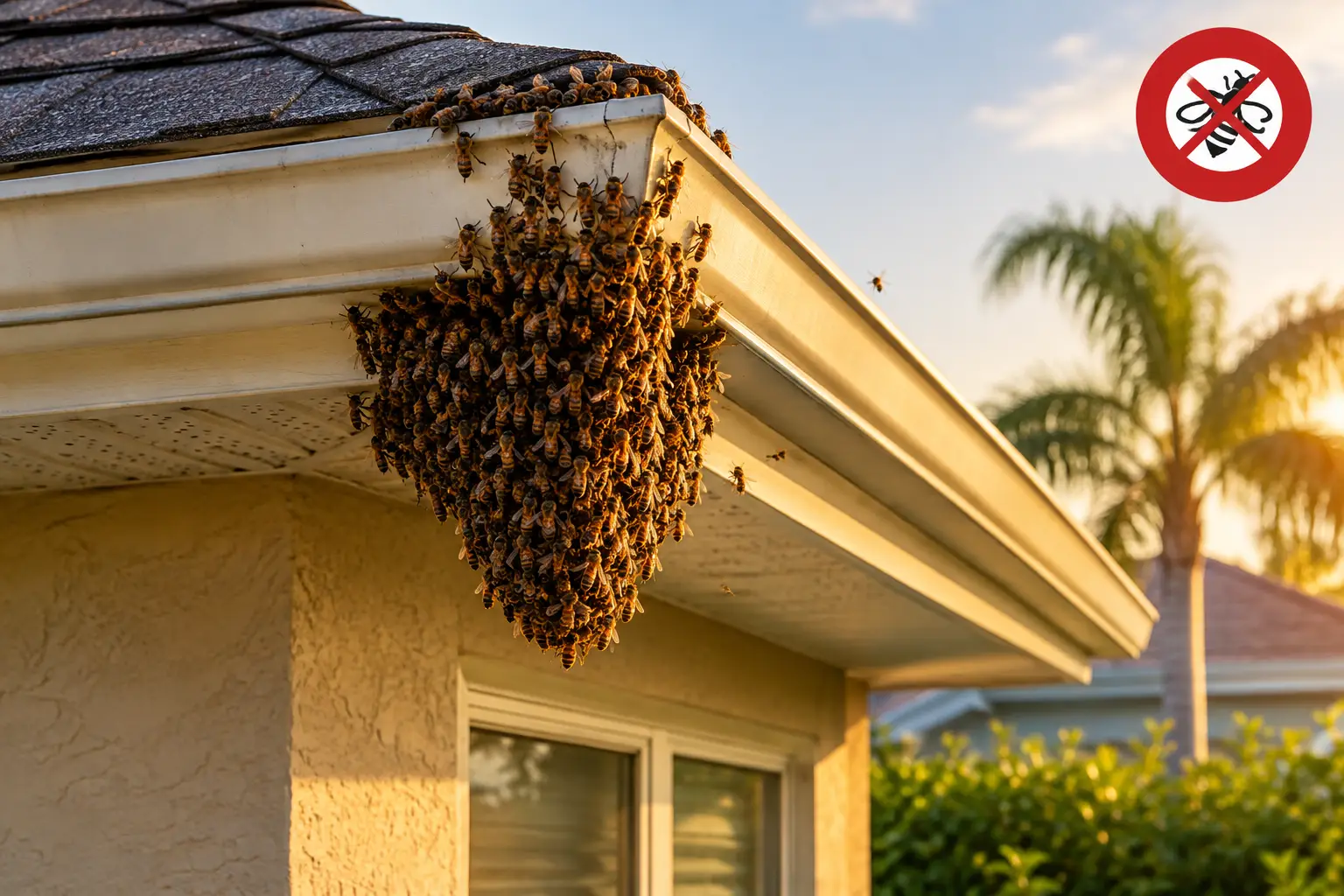

A few bees entering the same gap beneath a roofline can be easy to dismiss. But if you inspect roof bee nests early and from a safe distance, you may prevent honey, wax, moisture, and thousands of bees from becoming a much larger structural problem. The goal is not to get close to the colony or prove exactly what insect is present. It is to recognize the signs, protect people and property, and arrange the right response.
Why roof bee colonies require a careful inspection
Honey bees prefer protected cavities, and a roof can offer everything a colony needs: shade, warmth, a narrow entrance, and space behind soffits, fascia, vents, chimney flashing, or roof decking. What looks like a small opening from outdoors may lead into a large void where comb has been built for months or even years.
A colony in the roof is different from a temporary swarm resting on a branch. A swarm is usually a clustered group of bees that has not yet moved into a cavity. A roof colony has a consistent flight path, stored honey, wax comb, brood, and a growing population. Leaving that colony in place can eventually lead to staining, odors, leaking honey, pest activity, or damage when comb softens in Southwest Florida heat.
This does not mean the bees should be poisoned. Killing a colony inside a building often leaves the most damaging material behind: honeycomb and honey. The better approach is to identify the likely location and have the bees and comb removed, then have the entry point properly repaired.
How to inspect roof bee nests from the ground
A safe inspection begins outdoors, with both feet on the ground. Stand well back from the suspected entrance and watch the area for several minutes. Do not stand directly below the opening, block the bees’ flight path, or use a ladder to look into a soffit or vent.
Look for steady traffic rather than an occasional bee. Foraging honey bees commonly fly in and out of the same small opening in a purposeful pattern. You may see pollen on the rear legs of returning bees, especially during warm daylight hours. A consistent stream entering one gap under an eave, around flashing, or near a roof vent is a strong sign of an established colony.
Listen from a safe position, but do not press your ear against walls, ceilings, or roof components. In quiet conditions, a mature colony can sometimes produce a low, constant buzz inside a ceiling or upper wall. Visible dark staining below a roof edge, sticky residue, or an unusual sweet odor indoors can also point to honey or wax within the structure.
Take clear photos or video from a distance. A short video showing the flight path is often more useful to a bee removal professional than a close-up attempt. Note the exact side of the building, the height of the entrance, whether it is near electrical equipment or a chimney, and when activity is strongest.
Check at the right time of day
Honey bee flight activity is easiest to see in dry, warm daylight. Early morning, late evening, heavy rain, and cooler weather can make a busy colony appear quiet because many workers remain inside. If you see no activity during one brief observation, that does not rule out a colony.
Watch for five to ten minutes, then check again later in the day if conditions are safe. A repeated observation gives a more reliable picture without disturbing the bees.
Do not confuse bees with wasps or yellowjackets
Roofline activity is not always caused by honey bees. Wasps, hornets, and yellowjackets may also nest in soffits, attics, and wall voids, but their appearance and behavior differ. Honey bees are generally fuzzy and golden-brown, while many wasps have smoother bodies, narrower waists, and brighter yellow markings.
Accurate identification matters because removal methods differ. More importantly, aggressive defensive behavior should never be tested by getting closer. In Florida, bees may react strongly when a colony or its entrance is disturbed. Treat every active roof nest as a safety concern until a trained professional assesses it.
Signs the situation needs prompt professional help
A colony can remain hidden until it becomes difficult to ignore. Call for a professional inspection promptly if bees are entering a structural opening every day, activity is close to a doorway or patio, or the colony is located above a bedroom, living area, business entrance, or common walkway.
Urgency also increases when someone in the household has a known sting allergy, children or pets use the area, or bees are gathering around a pool enclosure, outdoor dining space, or HVAC equipment. For commercial properties and HOAs, an active colony near customer or resident traffic creates a liability concern as well as a building-maintenance issue.
If bees are inside the living space, have emerged through a ceiling fixture, or are massing around an interior window, keep people and pets away from that room. Close interior doors if possible, avoid swatting at the bees, and seek help. Do not attempt to vacuum bees, seal their exit, or spray the opening.
What not to do after finding bees in a roof
The instinct to close a visible gap is understandable, but sealing an active entrance can force bees into another part of the structure. They may find their way into an attic or living area, and the trapped colony can still leave honeycomb behind. Sealing should happen only after removal and cleanup are complete.
Avoid store-bought insecticide, foam, smoke, gasoline, or water sprayed into the opening. These measures can provoke defensive bees, create chemical exposure concerns, and leave dead bees, wax, honey, and odors in the cavity. They also make humane relocation less likely.
Do not climb onto the roof or remove soffit panels yourself. Roof work adds fall risk, while opening the cavity can expose you directly to a large colony. A small visible entrance does not tell you how much comb or how many bees are behind it.
Finally, do not assume the bees will simply leave. Honey bee colonies may abandon a cavity under some circumstances, but their comb, honey, and scent often remain. Those materials can attract ants, beetles, wax moths, rodents, and future bee swarms.
What a humane roof bee removal should address
A complete roof colony removal is more than collecting visible bees at an entrance. A qualified live-removal provider first confirms the colony’s location and determines the least invasive way to access it. Depending on the roof design, this may involve carefully opening a limited section of soffit, fascia, roof decking, or an interior surface.
The removal process should account for the adult bees, queen, brood, honeycomb, and stored honey. When the colony can be relocated alive, the bees can be moved to an apiary rather than destroyed. Removing the comb is essential because it prevents the lingering issues that poison-only treatments frequently leave behind.
After the cavity is cleaned, the structure needs to be closed correctly. This is where removal and construction awareness meet. The opening must be repaired without trapping bees inside or leaving an easy return route. Any damaged insulation, wood, or roofing material may need separate evaluation, particularly if honey has leaked or moisture is present.
At Beeswild, live colony removal is paired with relocation to safe farm areas, so the goal is to protect the home without treating valuable pollinators as disposable pests. For homeowners in Cape Coral and across Southwest Florida, asking how the comb will be handled is one of the most useful questions to ask before authorizing service.
After removal, keep the roof less inviting
Once the colony and comb are gone, inspect roof penetrations and trim regularly, especially after storms or roof repairs. Small separations around soffits, vents, pipes, and flashing can become future entry points. Repairing those gaps is preventive maintenance, not merely cosmetic work.
Watch the former entrance for activity in the weeks after removal. A few scout bees may investigate a familiar location, but sustained traffic should be reported. A reputable provider can explain what normal post-removal activity looks like and whether a same-location warranty applies.
Finding bees near a roof can feel alarming, but a measured response protects everyone involved. Observe from the ground, keep the entrance undisturbed, document what you see, and choose removal that addresses both the colony and the comb inside the structure.

No responses yet