
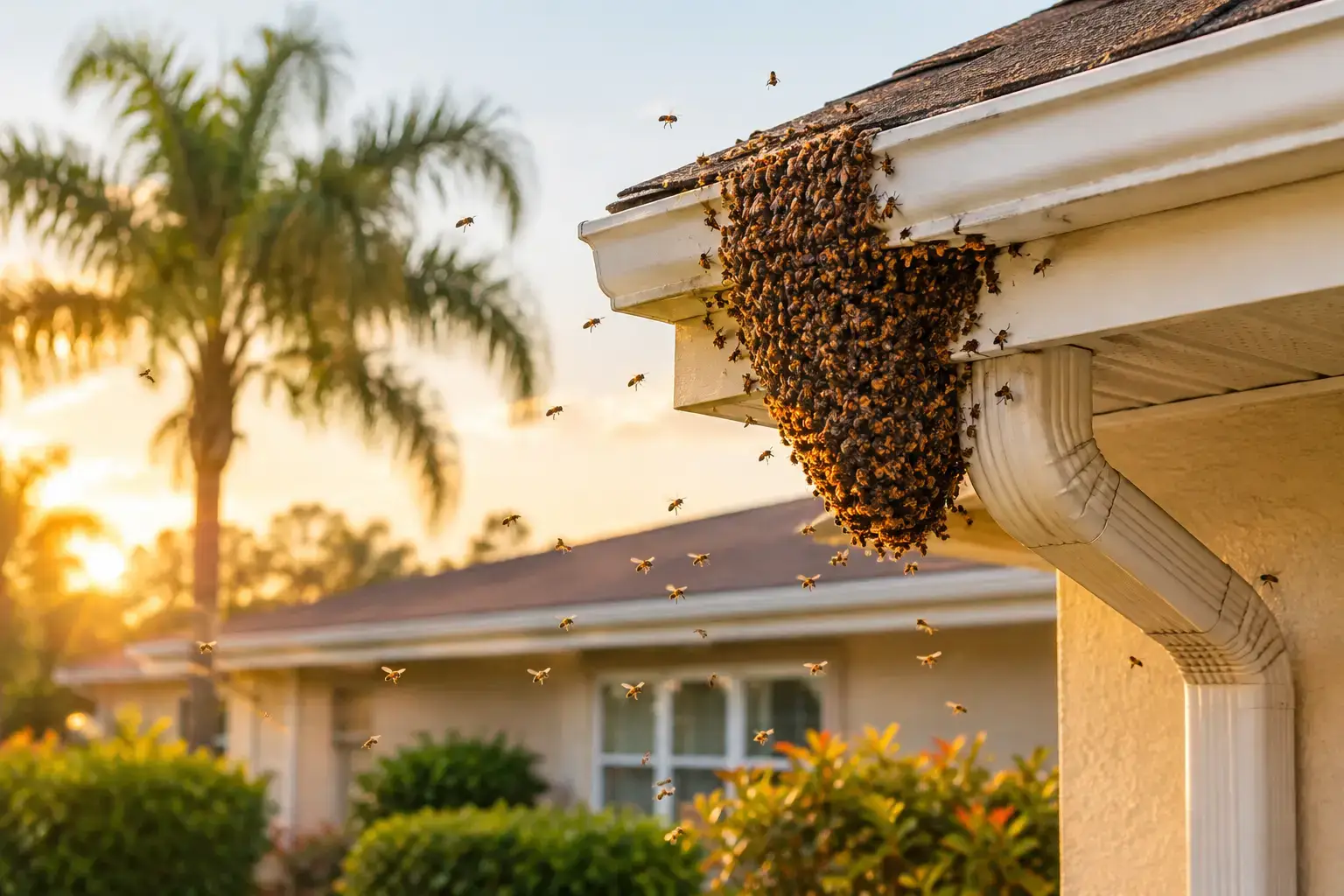

A bee colony behind a restaurant sign, inside a clubhouse soffit, or under a shopping-center roofline is not a routine pest-control call. It is a safety, building-maintenance, and public-perception issue happening at the same time. Well-defined commercial bee protocols give property teams a way to protect customers and workers while preserving a colony that can be safely relocated.
For commercial properties, the goal is not simply to make bees disappear from view. The goal is to identify the risk, secure the area, remove the colony and its hive materials correctly, and prevent another swarm from taking over the same cavity. Skipping any of those steps can turn a short-term fix into leaking honey, insects in walls, repeat activity, and a larger liability concern.
Why Commercial Bee Calls Require a Different Response
A homeowner may notice a small group of bees near a gutter and have time to observe it. A commercial property manager often does not have that luxury. Bees near an entry, outdoor dining area, playground, pool deck, loading zone, or employee walkway can interrupt operations quickly. Staff may be asked questions they cannot answer, guests may react out of fear, and an improvised response can make the situation worse.
Commercial sites also have more moving parts. There may be tenants, maintenance personnel, security staff, vendors, customers, and insurers to consider. A removal plan must account for public access, work hours, equipment staging, building materials, and the location of utilities. On a large property, clear communication is as necessary as the actual bee work.
In Southwest Florida, colonies can establish themselves in soffits, utility boxes, roof voids, walls, sheds, monuments, and landscape features. Warm conditions allow bee activity through much of the year. A small swarm resting in a tree may be temporary, but steady traffic into one opening usually signals an established colony that needs professional assessment.
The Core Commercial Bee Protocols
A practical protocol starts before anyone sprays, seals, pokes, or power-washes the area. Those actions can agitate a colony, force bees deeper into a structure, or trap honey and comb where it will cause damage later.
1. Assess the colony and the immediate hazard
The first step is to determine whether the bees are a passing swarm or a colony living inside a structure. A swarm often clusters visibly on a branch, fence, or exterior surface and may leave within a day or two. A colony has a fixed entrance and regular flight activity, with foraging bees repeatedly entering and exiting the same opening.
The assessment should also identify the exposure level. Bees beside a rear storage area present a different operational concern than bees at a school entrance or restaurant patio. If the colony appears defensive, is near a high-traffic space, or involves a person with a known sting allergy, the area should be restricted while the removal plan is arranged.
Property teams should document the location, time activity was first observed, visible entrance points, and any recent construction or storm damage. Photos taken from a safe distance can help a bee removal professional prepare for the visit. Employees should not be asked to get close for better pictures.
2. Control access without escalating the bees
Temporary barriers, cones, signage, or a redirected pedestrian route can reduce risk immediately. The right perimeter depends on the colony’s behavior, site layout, and how close the public must pass. Security and front-office teams should receive a simple message: keep people away from the area, do not throw objects or spray the bees, and direct questions to a designated manager.
Avoid using leaf blowers, pressure washers, lawn equipment, bright work lights, or loud construction activity near the entrance if it can be postponed. Even routine landscaping can become a trigger when workers unknowingly operate beside an active colony.
3. Use live removal when the site and safety conditions allow
Humane removal involves collecting the adult bees, locating and removing the comb, and transferring the colony for relocation to an apiary or other suitable setting. This approach recognizes that honey bees are valuable pollinators and managed livestock, not simply a nuisance to destroy.
It also addresses an often-overlooked building issue. If a colony in a wall is killed but the honeycomb remains, stored honey can melt or seep into insulation and drywall. The odor and residue may attract ants, wax moths, roaches, rodents, and other pests. New swarms can also be drawn to the old comb scent.
Live removal is not identical in every case. A reachable soffit colony may be removed with limited access work, while a large colony deep inside a masonry wall may require more planning and repair coordination. The least disruptive method is not always the most thorough method, so property managers should ask how comb removal, cleanup, and closure will be handled.
4. Remove hive materials and correct the entry point
Removing visible bees alone is incomplete. Commercial bee protocols should require removal of comb, honey stores, brood material, and residue whenever structural access makes that possible. The cavity then needs to be cleaned and evaluated before it is closed.
Closure matters because bees are skilled at finding protected voids. Gaps around pipes, deteriorated fascia, unsealed utility penetrations, loose flashing, and openings behind signs can all become future nesting sites. Repairs should use appropriate materials for the building rather than a quick surface patch that fails in the next storm season.
This is also where coordination pays off. The bee removal specialist can identify the colony area, while the property’s maintenance team or contractor completes finished repairs consistent with the structure’s design and code requirements.
5. Monitor, document, and communicate after removal
A commercial property needs a clear record of what happened. The service report should identify the colony location, removal method, condition of the access area, recommendations for repairs, and any follow-up monitoring. That documentation helps maintenance teams, boards, and owners understand why a specific repair is necessary.
Some flight activity may continue briefly after removal as foraging bees return to the former entrance. This does not always mean the colony remains. A qualified provider can explain what normal post-removal activity looks like and when a revisit is warranted. For recurring locations, a same-place removal warranty can provide useful reassurance, provided the property follows recommended exclusion and repair steps.
What Commercial Teams Should Do Before Help Arrives
The most effective response is calm, limited, and organized. Do not assign staff to seal the opening, apply store-bought insecticide, or remove a visible swarm without training. These actions can scatter or provoke bees and may complicate a live removal.
Instead, assign one point of contact who can meet the technician, provide roof or utility access if needed, and approve any necessary work. Notify tenants or staff only with the information they need: the affected area, temporary route changes, and the expected duration of restrictions. Overstating the danger can create unnecessary panic, while saying nothing can leave people exposed.
For locations with repeat bee activity, include bee checks in seasonal building inspections. Soffits, rooflines, mechanical enclosures, exterior signs, and unused structures deserve extra attention. Early detection usually means fewer bees, less structural access, and a simpler relocation.
Questions That Clarify a Removal Proposal
Commercial clients should expect more than a price and an arrival window. Ask whether the provider performs live removal and relocation, whether comb and honey will be removed, what building access may be required, and who is responsible for final repairs. It is also reasonable to ask about insurance, site safety procedures, aftercare, and whether the quoted work includes follow-up.
The right approach depends on the colony’s location, its behavior, the building construction, and the level of public exposure. A bee colony in a remote equipment enclosure may allow a more measured schedule. Bees at a busy entrance may require same-day access control and faster action. In either case, a documented plan protects the property better than a quick chemical response with no attention to what remains inside the structure.
A well-managed bee removal protects people first while giving a valuable colony a chance to continue its work somewhere safer. That is the standard commercial properties should expect: careful assessment, humane relocation when feasible, thorough cleanup, and a building that is less inviting to the next swarm.

No responses yet