
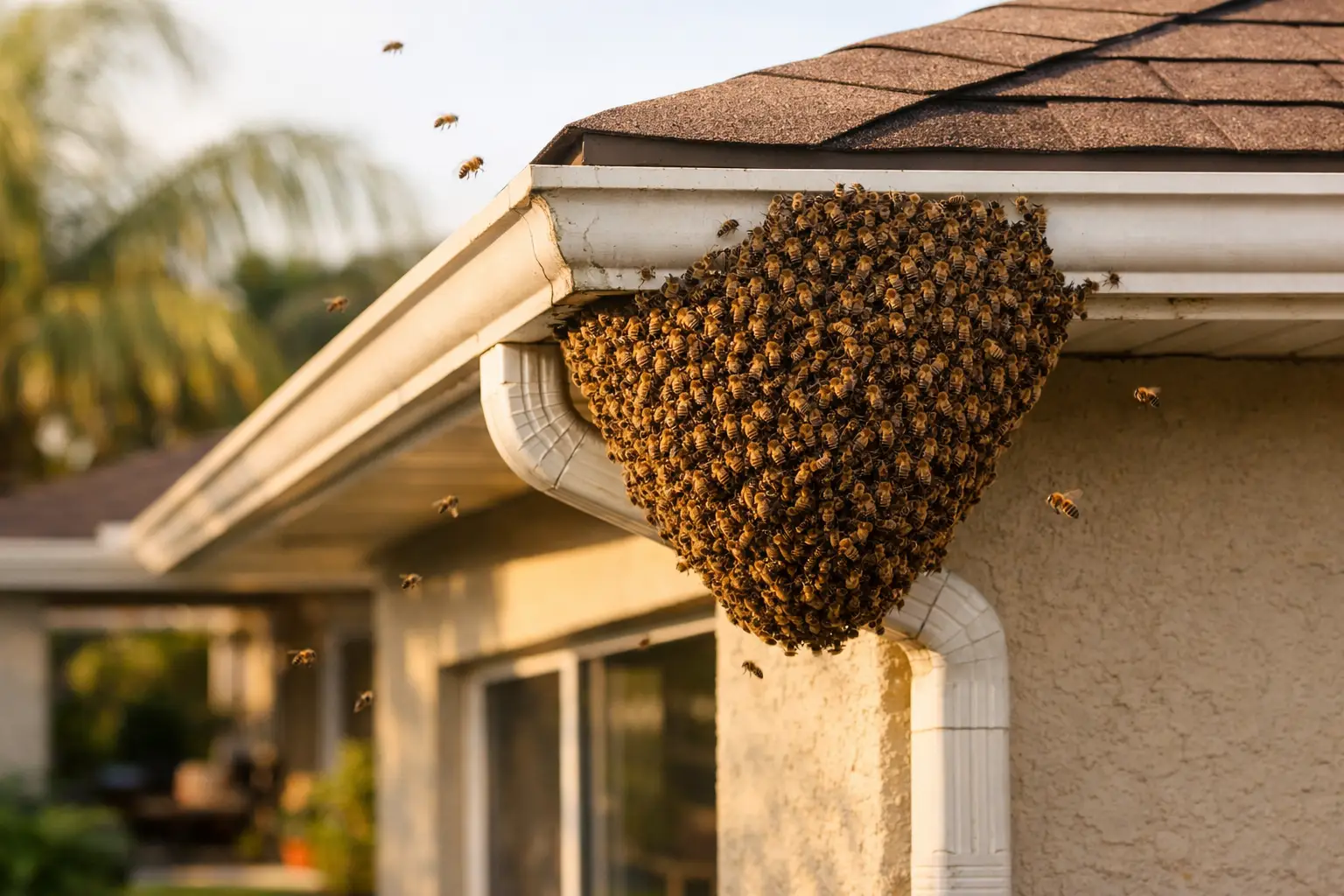

A colony in a soffit, wall, attic, or roofline can turn from a surprising discovery into a property concern quickly. Homeowners often ask, does homeowners insurance cover bees when they notice regular bee activity near an entry point or hear buzzing behind drywall. The honest answer is: sometimes, but usually not in the way people expect.
Insurance policies are designed around sudden, accidental damage. Bee colonies typically establish themselves gradually, which can place removal, repairs, and honey cleanup outside standard coverage. Still, the details matter. A careful look at your policy, the cause of the damage, and the condition of the structure can help you understand what may be covered before costs grow.
Does Homeowners Insurance Cover Bees or Bee Removal?
Most standard homeowners insurance policies do not cover the cost of removing bees, wasps, or other insects. Insurers commonly classify an active colony as pest or wildlife-related maintenance, similar to dealing with termites, rodents, or a nest in the yard.
That means the fee for live bee removal is often the homeowner’s responsibility. This can feel frustrating, especially when a colony has chosen a difficult location such as a second-story roof, chimney cavity, or exterior wall. However, removing the bees correctly is only part of the work. A structural colony may also contain comb, honey, brood, and wax that must be addressed to prevent additional damage.
Some policies include limited pest-control endorsements, service plans, or optional coverage that may help with certain removal costs. These are not universal. Read the endorsement carefully and ask your insurance representative whether it covers active bee removal, access and repair work, or only specific pests.
When Bee Damage May Be Covered
Although the colony itself is often excluded, the resulting property damage may be covered under particular circumstances. Coverage depends on the policy language and the cause of loss, not simply on the fact that bees were present.
For example, a sudden covered event such as a windstorm could damage a roof and expose a cavity where bees later enter. The storm-related roof damage may be covered, while removing the colony that arrived afterward may not be. Likewise, if a covered peril causes a portion of the structure to collapse or break open during removal, there may be a separate claim question for the resulting repair.
The key distinction is whether damage was sudden and accidental or developed over time. Honey leaking through a wall after a colony has lived there for months is commonly viewed as gradual damage. Insurers may also point to policy exclusions for insects, infestation, deterioration, neglect, mold, or faulty maintenance.
Do not assume a denial is automatic, but do not assume approval either. Ask your insurer to review the specific circumstances, and request the claim decision in writing if you file one.
Common expenses that may not be covered
Homeowners are often responsible for the removal itself, opening and closing the access area, replacing insulation affected by honey or beeswax, and repairing minor staining or odor issues that developed over time. If bees entered through an existing gap, sealing that entry point may also be considered routine maintenance.
This is one reason early action matters. A newly established colony is generally simpler to remove than a mature colony that has built extensive comb inside a wall or roof cavity. Waiting can allow honey stores and comb to increase, which raises both the cleanup requirements and the potential for staining, fermentation, ants, beetles, rodents, and other unwanted visitors.
Why Killing the Bees Can Create a Bigger Insurance Problem
When bees are inside a structure, spraying poison into an opening may seem like the fastest fix. It often creates a second, more expensive problem.
Pesticides can kill some or all of the bees, but they do not remove the comb, honey, wax, or dead bees left behind. In Southwest Florida’s heat and humidity, honey can soften, drip, ferment, or attract pests. A vacant cavity containing comb may also draw a new swarm later, especially if access points remain open.
From an insurance perspective, damage that develops after an unsuccessful DIY treatment may be even harder to classify as sudden or accidental. More importantly, spraying near a wall or roof opening can expose family members, pets, and nearby pollinators to unnecessary risk. Colonies should be evaluated by a trained professional, particularly when activity is aggressive or located near doors, walkways, pools, schools, or outdoor work areas.
Live removal addresses the full situation. The goal is to safely collect and relocate the bees, remove accessible comb and honey, clean the cavity as appropriate, and seal or repair the entry route. This protects the structure while preserving a valuable pollinator colony whenever conditions allow.
What to Do Before Calling Your Insurer
Start by documenting what you can see without approaching the colony. Take photos or video from a safe distance showing bee activity, the exterior entry point, visible staining, and any suspected damage. Note when you first noticed activity and whether it increased after a storm, roof issue, or other event.
Then call your insurance carrier or agent before authorizing extensive structural repairs. Explain that you have an active bee colony and ask direct questions: Is bee removal covered under my policy? Does my policy cover resulting honey damage? Is there coverage if a covered event created the opening? Do I need an adjuster to inspect before repairs begin?
Avoid making broad assumptions based on a neighbor’s policy or an online discussion. Policy forms, deductibles, endorsements, prior claims, and state-specific rules vary. In Florida, homeowners also need to consider hurricane deductibles and whether a larger claim is worth filing after the deductible is applied.
If there is an immediate safety concern, prioritize safety. Keep children and pets away from the area, avoid blocking the bees’ flight path, and do not strike, spray, or seal an active entrance. Disturbing a colony can cause defensive behavior and trap bees inside, where they may search for another route into the living space.
Choosing a Bee Removal Company That Protects the Home
A removal quote should explain more than the number of bees involved. Ask whether the provider performs live removal and relocation, whether comb and honey will be removed, how access areas are handled, and who is responsible for final cosmetic repairs. A colony behind siding requires a different approach than one in a block wall, attic, palm tree, or irrigation box.
For structural removals, a clear scope of work helps homeowners understand the trade-off between the least invasive access method and the need to fully remove the materials that can cause future problems. The cheapest approach is not always the most economical if it leaves honey and comb inside the structure.
Beeswild serves Southwest Florida with live removal and relocation designed to protect both people and colonies. Its same-place removal warranty for three months also addresses a common homeowner concern: whether bees will return to the exact location after the work is done.
Documentation Can Help With a Claim
Even when removal is not covered, keep records. Save the removal estimate, paid invoice, photos taken before and after service, written findings about colony location, and receipts for repairs. If the contractor identifies a pre-existing opening, storm damage, or another potential source of entry, ask for that observation in writing.
Good documentation does not guarantee insurance coverage. It does give your carrier a clearer picture of the timeline and condition of the property. It can also help future contractors understand what was removed and where repairs were completed.
A bee colony is not a reason to panic, but it is a reason to act with care. Addressing it promptly with humane, complete removal can limit damage, protect the people around the property, and give the bees a safer place to continue their work.

No responses yet