
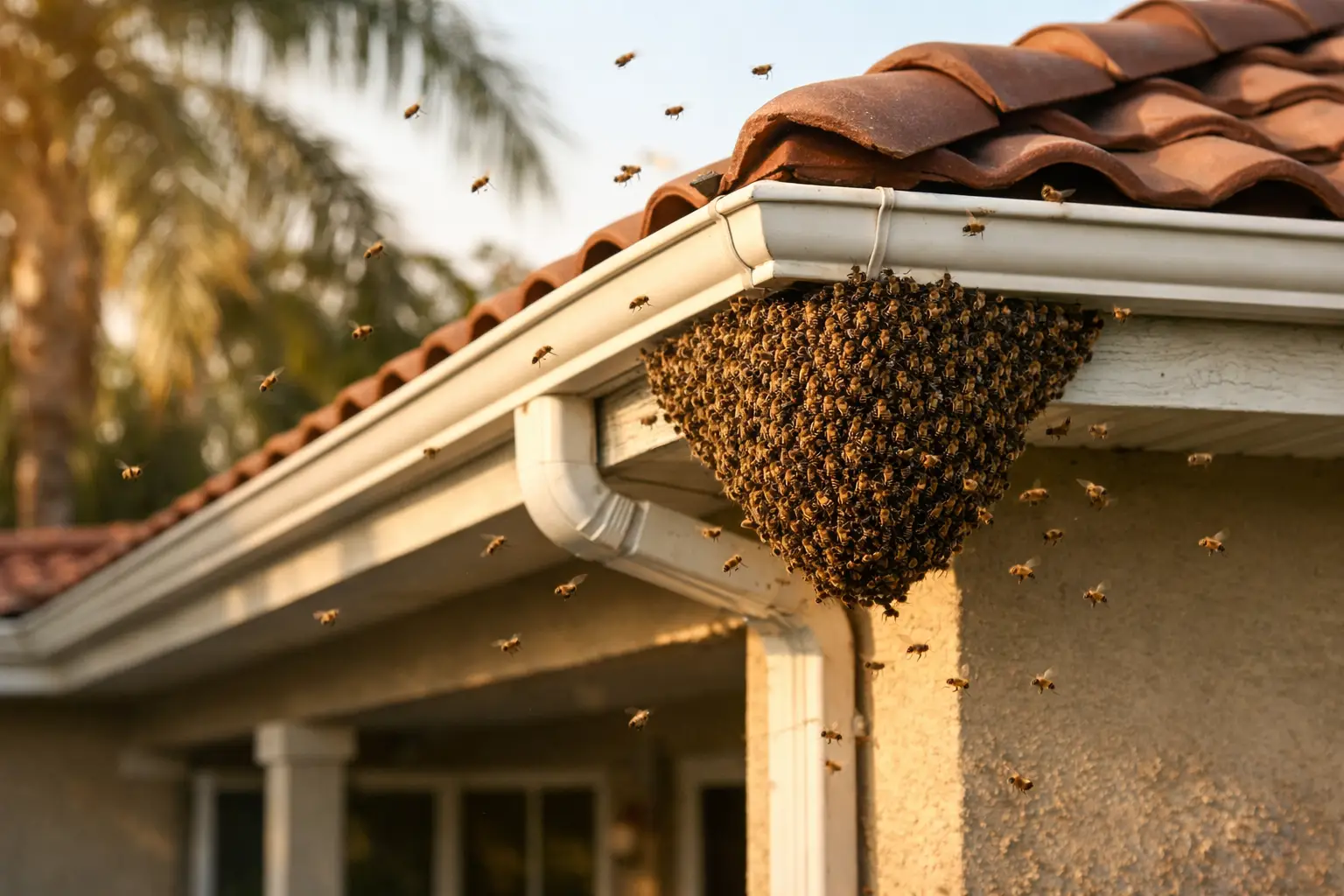

A few bees investigating a soffit, shed, or wall opening can become a much bigger property issue within days. Knowing how to prevent bees nesting around your home is less about repelling every bee you see and more about removing the sheltered entry points that a colony needs to survive.
That distinction matters. Bees are valuable pollinators, but a colony living inside a wall, roofline, utility box, or pool enclosure can leave behind honey, wax, and moisture that damage the structure long after the bees are gone. In Southwest Florida, warm weather also gives bees a longer season to scout for suitable homes.
The safest approach is prevention before a colony moves in, followed by humane professional removal if it already has.
Why Bees Choose Certain Parts of a Property
Honey bees do not build exposed nests like many wasps. A swarm searching for a permanent home looks for a protected cavity with a small entrance, dry interior space, and enough room for comb. Wall voids, attic gaps, soffits, chimneys, sheds, and hollow trees meet those requirements surprisingly well.
A crack that looks too small to matter to a homeowner may be large enough for worker bees. Openings around plumbing penetrations, loose fascia boards, damaged vents, and gaps where utility lines enter the building are common access points. Once scout bees find a cavity they like, they communicate its location to the swarm. That is why activity can go from a few bees to thousands in a short period.
Bees may also be drawn to a property because it offers water, flowering plants, and sunny protected surfaces. Those resources do not necessarily cause a colony to move into the house, but they can make the area more appealing to foraging bees.
Start With Exclusion, Not Chemicals
The most reliable way to prevent bees from nesting is to identify and close potential entry points before bees occupy them. This is called exclusion. It protects the building without treating beneficial insects as a nuisance simply because they are nearby.
Walk around the exterior of your home on a bright day, paying close attention to rooflines and areas where different building materials meet. If you can see daylight through a gap from inside an attic or garage, insects can often use that same opening from outside.
Focus your inspection on these common trouble spots:
- Soffits, fascia boards, roof vents, and gable vents
- Gaps around pipes, electrical conduits, cable lines, and air-conditioning equipment
- Cracked stucco, loose siding, and openings at wall penetrations
- Chimneys, sheds, detached garages, pool cages, and hollow landscape features
Repair damaged wood and secure loose trim rather than simply covering it with caulk. For small stationary gaps, exterior-grade sealant can work well. Larger openings may need hardware cloth, screening, flashing, or replacement materials. Vent covers must still allow proper airflow, so use a durable insect screen designed for that purpose rather than blocking ventilation altogether.
The timing is critical: never seal an opening with active bee traffic. If bees are entering and exiting a hole, there may already be a colony inside. Closing it can trap bees indoors or force them into another part of the structure. It can also leave honey and comb inside the cavity, creating a future problem with stains, odors, ants, beetles, or rodents.
Keep Water and Outdoor Structures From Becoming Bee Magnets
Bees need water, especially during hot weather. A birdbath, dripping hose bib, pet bowl, or pool edge may attract foraging bees, but this does not mean there is a nest on the property. The goal is to reduce predictable water sources near doors, patios, and play areas without making your yard hostile to pollinators.
Fix irrigation leaks and outdoor plumbing drips promptly. Empty standing water where practical, and keep pet water in a location away from high-traffic entrances. If bees regularly collect at a pool, check for small leaks or damp soil around equipment before assuming the pool itself is the issue.
Sheds and other outbuildings deserve the same attention as the main house. Keep doors closed, repair damaged screens, and inspect eaves several times a year. Stored boxes, unused planters, and open wall cavities can provide protected spaces for a swarm, particularly when a building sits undisturbed for long periods.
Flowering landscaping is not something homeowners need to remove. Native plants and flowering trees support pollinators and other wildlife. Instead, place heavily flowering plants away from patios, pool gates, and frequently used doorways when possible. A bee visiting blooms across the yard is normal. A steady flight path into a wall or roof opening is a different concern.
Know the Difference Between a Swarm and an Established Colony
A swarm often appears as a clustered mass of bees on a tree branch, fence, mailbox, or exterior wall. It can look alarming, but swarming bees are usually focused on finding a new home. They may remain in place for hours or a few days while scouts search the area.
An established colony has a consistent entrance. You may see bees flying in and out of the same hole from morning through late afternoon. In some cases, you may hear buzzing within a wall or notice dark staining near an opening. That pattern calls for action sooner rather than later.
Do not spray a swarm or a suspected colony with household insecticide. Poison often fails to address the underlying comb and honey inside a structure. It can also leave dead bees, contaminated materials, and surviving bees that relocate deeper into the building. More importantly, disturbed bees can become defensive, especially when a colony is protecting brood and honey.
Keep children, pets, and visitors away from the area. Avoid mowing, pressure washing, drilling, or repeatedly tapping near the suspected colony. If anyone is stung and develops trouble breathing, swelling of the face or throat, dizziness, or widespread hives, seek emergency medical care immediately.
When Professional Live Removal Is the Right Step
Prevention has limits. If bees have already entered a wall, soffit, roof, or other structural cavity, a professional live removal is usually the responsible solution. Proper removal involves locating the colony, accessing it carefully, removing the bees and comb, cleaning residual honey, and then closing the access point so another swarm cannot move in.
This last part is what separates a short-term bee treatment from a lasting structural solution. Leaving comb behind can attract wax moths, ants, roaches, and other pests. In Florida heat, stored honey can melt or ferment and stain drywall or ceilings. A careful removal protects the home while giving the colony a chance to continue its role as a pollinator elsewhere.
For homeowners in Cape Coral and surrounding Southwest Florida communities, bee behavior also deserves extra caution. Do not try to identify whether a colony is gentle or defensive by getting close to it. Any colony can defend its nest when threatened, and professional assessment is safer than a do-it-yourself test.
Beeswild approaches structural bee issues through live removal and relocation, followed by practical exclusion recommendations. That protects the property without treating a living colony as disposable.
Make Prevention Part of Routine Home Maintenance
A bee-proof home is not created by one repair. Caulk can age, storms can loosen soffits, screens can tear, and small gaps can form as a building settles. Inspect the exterior after severe weather and include rooflines, vents, and utility penetrations in your regular maintenance schedule.
If you notice a few bees repeatedly examining the same crack, act while they are still scouting. A timely repair may prevent a colony from choosing your home at all. If there is already steady bee traffic, step back, keep the area calm, and arrange for humane removal before the colony becomes harder to access and more expensive to resolve.

No responses yet