
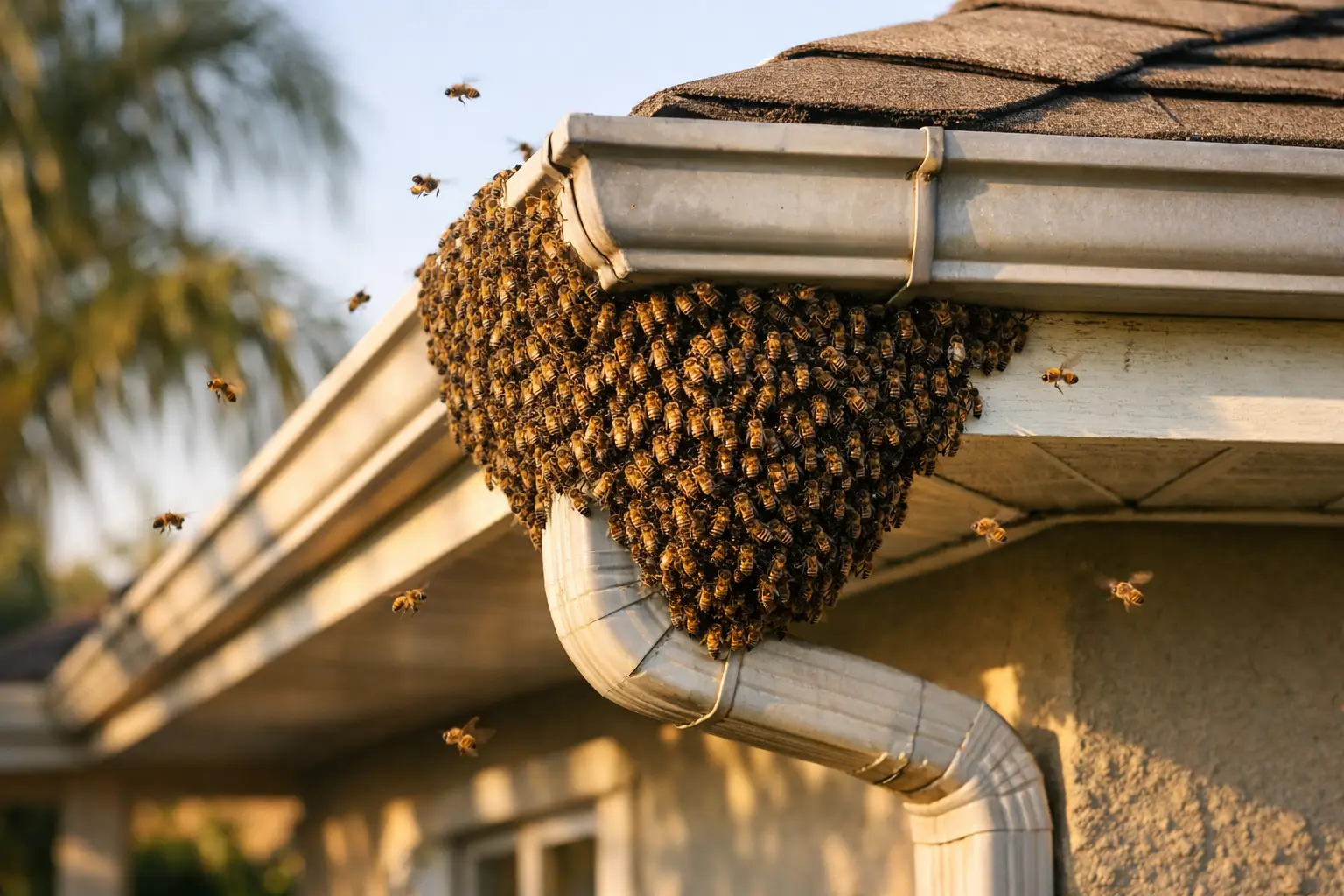

A successful live bee removal does not end when the bees are safely relocated. The guide to honeycomb cleanup begins with what remains inside the wall, soffit, roofline, tree cavity, or utility structure: wax comb, stored honey, pollen, brood material, and the scent signals that can attract new bees. Leaving those materials behind can turn a humane bee rescue into an expensive property problem.
For Southwest Florida homeowners and property managers, cleanup matters especially because heat, humidity, ants, roaches, and other scavengers can quickly expose an unfinished removal. The right approach protects the building while respecting the value of the colony that was removed.
Why Honeycomb Cleanup Is Part of Bee Removal
A honey bee colony builds comb as its home and food-storage system. Even a modest colony can leave behind pounds of wax and honey. Once the bees are gone, that honey is no longer being cooled, guarded, or maintained. In a warm wall or attic, it can soften, ferment, leak through drywall, stain ceilings, and draw insects or animals looking for an easy meal.
Wax comb also carries the odor of a previously occupied nest. Scout bees from another swarm may investigate that scent, particularly if the entrance remains open and the cavity still feels protected. Simply sealing a hole without removing the comb may trap moisture and food inside while preserving an invitation for future bees.
This is why poisoning an established colony is rarely a complete solution. It may kill bees, but it does not remove honey, wax, odor, or the structural opening that allowed the bees inside. Live removal followed by thorough cleanup addresses the actual source of repeat activity and damage.
Guide to Honeycomb Cleanup: What a Proper Process Includes
Cleanup should begin only after the colony has been fully removed or confirmed inactive by a trained bee-removal professional. If bees are still entering and leaving, or if you hear steady buzzing inside a wall, do not open the area yourself. Disturbing an active colony can cause defensive behavior and increase the chance of stings.
1. Open the access area carefully
To remove comb completely, the technician needs direct access to the cavity where the colony lived. That may mean lifting a section of soffit, removing siding, opening a limited portion of drywall, or accessing the space from an attic or roofline. The least invasive access point is preferred, but complete removal is more important than making the opening look untouched.
There is a real trade-off here. A small repairable opening is usually less costly than allowing honey to seep into insulation, framing, or finished walls later. For commercial properties, the goal is also to document the condition of the area and coordinate repairs around tenant or customer safety.
2. Remove all comb, honey, and loose colony material
Every visible section of comb should be taken out, including pieces tucked between studs, behind insulation, or above ceiling lines. Old comb is not harmless just because it no longer contains bees. It can hold honey residue, pollen, dead bees, and wax moth larvae.
The surrounding cavity should be scraped clean without damaging wiring, plumbing, vapor barriers, or structural components. Honey-soaked insulation often cannot be effectively cleaned and may need replacement. If honey has traveled farther than expected, a professional may need to inspect adjacent framing or the ceiling below before closing the opening.
3. Clean residue without creating a larger problem
Cleaning a bee cavity is different from spraying a surface with household cleaner. Strong fragrances, excessive water, or indiscriminate pesticide use can create new issues in a closed wall or attic. The objective is to remove food residue and reduce the lingering nest scent while keeping the building materials dry.
A professional cleanup may include careful vacuuming, wiping accessible surfaces, removing contaminated debris, and applying an appropriate odor-neutralizing treatment where needed. The exact method depends on the material involved. Bare masonry, wood framing, aluminum soffit, drywall, and insulation all respond differently to moisture and cleaning products.
Do not wash a cavity with a hose or pour large amounts of water into it. Water can carry honey deeper into the structure, feed mold growth, and stain finishes that were previously unaffected.
4. Inspect for secondary pests and damage
Once the comb is out, the empty cavity needs a close inspection. Honey can attract ants, cockroaches, beetles, rodents, and wax moths. In Florida, small sugar ants are often the first sign that honey residue remains somewhere behind a surface.
Look for stained drywall, sagging insulation, softened wood, droppings, chewed materials, or insect activity. A colony may also reveal an existing construction issue, such as an unsealed roof penetration, a loose soffit panel, or gaps around vents and utility lines. Bees typically choose cavities that are dry, sheltered, and easy to enter. Closing the repair without correcting that access point leaves the property vulnerable to another colony.
5. Seal entry points after the cavity is clear
Exclusion is the final structural step. Openings around soffits, fascia boards, roof returns, vents, electrical conduits, and siding should be repaired with materials suited to the structure. The entrance used by the colony is rarely the only gap worth addressing, so nearby seams should be checked as well.
Timing matters. Sealing too early can trap surviving bees inside, where they may find another way into a living space. Sealing after comb removal and a final bee-activity check is the safer sequence. If the colony was located in a difficult area, such as a tile roof or multi-story exterior, the repair may require a roofer, carpenter, or building-maintenance contractor in addition to the bee-removal team.
What Homeowners Can Safely Do
After a professional has removed the colony and cleared the cavity, homeowners can help protect the area. Keep an eye on the repaired location for renewed bee traffic, especially on warm afternoons when scouts are active. Check nearby ceilings and walls for new staining, sticky spots, or a sweet fermented odor.
You can also keep vegetation trimmed away from soffits and exterior walls, repair damaged screens, and avoid storing open sugary drinks or food waste near the former nesting area. These steps will not replace proper exclusion, but they reduce the number of attractive pathways and food sources around the building.
For the next several days, it is normal to see a few confused worker bees returning to the former entrance. Their numbers should decline quickly. A growing number of bees, repeated clustering, or fresh construction activity means the site should be reinspected.
When Cleanup Requires More Than a Basic Repair
Some situations need added care. A large colony that occupied a wall for months may have extensive honey stores. A nest above a finished ceiling can cause concealed staining before it becomes visible. A colony in a restaurant, condominium, school, or HOA clubhouse may also require a documented repair plan because public access and liability are involved.
If bees entered through a roof, cleanup should include a check for water intrusion. If they occupied a chimney or an exterior utility enclosure, the repair must preserve safe operation and required ventilation. Each site has different constraints, which is why a one-size-fits-all cleanup approach can fail.
Beeswild approaches removal as both a property-protection service and a bee-rescue effort: relocating viable colonies to safe farm locations while addressing the comb and access conditions that brought them into conflict with people.
A Clean Cavity Is What Prevents the Next Problem
The visible swarm may be gone, but the hidden work determines whether the property stays protected. Removing every practical piece of comb, cleaning honey residue, inspecting the surrounding materials, and sealing the access route gives the building a real fresh start. If you are unsure whether a previous removal included that work, a prompt inspection is far easier than waiting for honey stains, ants, or a new colony to make the answer obvious.

No responses yet