
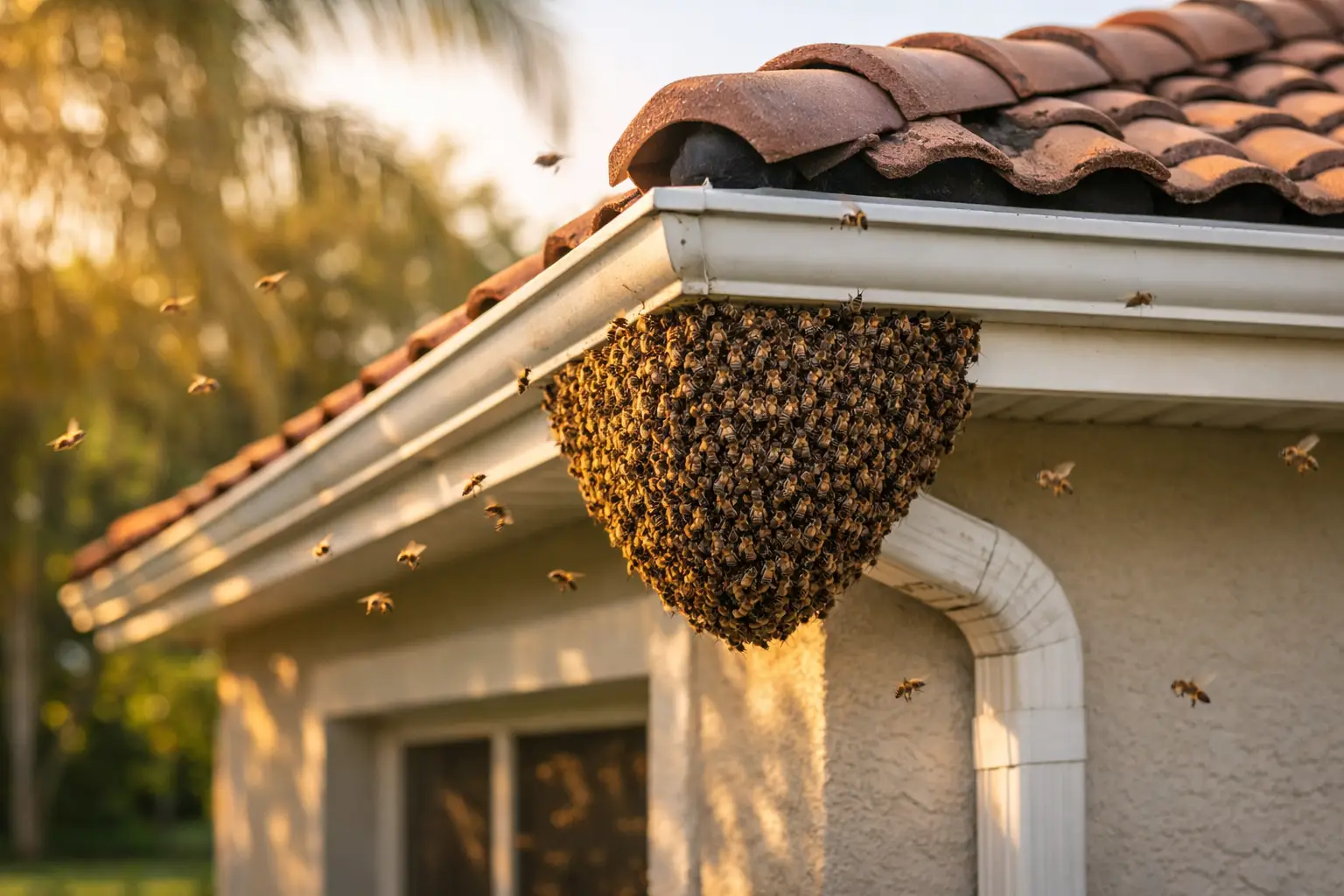

A quiet bee entrance at a soffit, wall vent, or roofline can become active again weeks after a removal. So, can bees return after removal? Yes, but the reason matters. Sometimes surviving bees are trying to regain access to their former nest. Other times, an entirely new swarm has found the same attractive cavity. A proper live removal is designed to prevent both situations, but only when the colony, comb, honey, and entry points are addressed together.
For homeowners, property managers, and HOA boards, the goal is not simply to make bees disappear from sight. It is to remove the colony safely, protect people near the structure, and leave the area unsuitable for another colony.
Why Bees Return After Removal
Honey bees do not casually choose a home inside a wall or roof. Once a scout finds a dry, protected void with a narrow entrance, the location can be highly attractive to a swarm. Cavities in soffits, block walls, chimneys, water-meter boxes, sheds, and rooflines provide protection from weather and predators. In Southwest Florida, the warm climate can make those spaces usable for much of the year.
The most common reason for a return is an incomplete removal. If honeycomb and stored honey remain inside a wall, they leave a strong scent signal. Wax, propolis, brood residue, and old entrance odors can also make the void appealing to scout bees searching for a new home. A new swarm may not be the same colony at all, but it can use the old space because the evidence of a successful hive is still there.
A second possibility is that bees were excluded before the colony was fully removed. Closing an active entrance can trap bees and honey within the structure. The bees may find another way out through a vent, crack, light fixture, or interior wall gap. They can also gather at the sealed area, attempting to reach their queen and brood.
There is a third, less obvious scenario: a few returning foragers may linger after a colony is removed. Worker bees that were away collecting nectar and pollen do not instantly know the hive is gone. They may fly around the former entrance for a short period, often diminishing over several days. That activity does not necessarily mean the colony remains inside.
Can Bees Return After Removal if the Hive Is Gone?
They can, but a truly complete removal greatly lowers the chance. The difference is between removing bees from an opening and removing the full colony from the structure.
A complete structural removal begins with locating the nest and identifying the bees’ access route. The beekeeper then removes the adult bees, queen, brood comb, honey stores, and attached wax from the cavity. The area is cleaned as practical, and the original entry point is sealed only after removal is complete. Damaged building materials may need repair, especially when the colony has occupied the space long enough for comb and honey to spread through a larger void.
This approach takes more care than spraying an entrance. It also recognizes an uncomfortable truth: poison may kill visible bees, but it does not remove the honey, wax, dead bees, or odor inside the wall. Those materials can attract wax moths, ants, roaches, beetles, rodents, and future bee swarms. Honey can also soften and leak during Florida heat, staining drywall or ceilings.
Live removal and relocation offer a practical alternative. The colony is preserved and moved to a managed apiary rather than destroyed inside a building. The property still needs thorough cleanup and exclusion work, because saving the bees and protecting the structure are parts of the same job.
The Difference Between a Swarm and a Reinfestation
A swarm is a temporary cluster of bees, usually gathered on a branch, fence, vehicle, or exterior wall while scout bees search for a permanent nesting site. It may look alarming, but it often has no honeycomb or established home at that location. A swarm can move on within hours or days, though waiting is risky when it is near doors, children, pets, or public walkways.
An established colony has moved beyond that temporary stage. You may see a steady stream of bees using one opening throughout the day, especially in fair weather. The bees carry pollen into the entrance, and the colony may make a low hum that is noticeable near the wall or ceiling. Colonies can grow quickly, producing more comb and stored honey as time passes.
If bees appear in the same place soon after a removal, a professional inspection can distinguish between leftover foragers, a colony that was not fully removed, and a new swarm moving into an unsealed cavity. This distinction determines the right remedy. Sealing a void against a new swarm is different from reopening a structural area to remove remaining comb.
What Prevents Bees From Coming Back
Prevention depends on making the former nesting site inaccessible and less attractive. Once the colony and materials are removed, exterior gaps should be closed with durable, building-appropriate materials. Foam alone is rarely a long-term answer where bees, weather, or other pests can damage it. The repair should account for the structure’s design, drainage, ventilation, and needed access to utilities.
Pay attention to areas where construction materials meet: soffit-to-wall joints, pipe penetrations, fascia boards, roof transitions, utility boxes, vents, brick gaps, and openings around siding. Bees can use surprisingly small spaces, and an opening that looks minor from the ground may lead to a large void behind it.
Homeowners should also avoid leaving honeycomb in a wall simply because bee activity has stopped. A quiet entrance is not proof that the cavity is clean. If a colony was treated rather than removed, the remaining material can create a delayed property problem after the bees are gone.
A removal warranty can be meaningful when it clearly defines what it covers. Beeswild, for example, offers a three-month same-place-removal warranty. That type of coverage is useful because it recognizes that bee behavior and building conditions sometimes reveal a remaining access issue after the initial work. It should not be confused with a promise that no swarm will ever investigate a property again. No beekeeper can control every swarm flying through the neighborhood, but a complete removal and proper exclusion make the original nesting area far less likely to be chosen.
When a Return Requires Urgent Action
Treat active bee traffic around a structure as a safety concern, especially near entrances, pools, playgrounds, outdoor dining, or maintenance areas. Do not spray the bees, plug the opening, strike the hive, or try to smoke them out. Those actions can provoke defensive behavior and may force bees deeper into the structure.
Urgency increases if people or animals have already been stung, if the bees are entering an occupied interior area, or if the colony reacts strongly when someone comes near. Southwest Florida can have more defensive honey bee populations, so behavior should be assessed from a safe distance rather than tested by approaching the entrance.
For a commercial property or HOA, document the location and keep people away from the area while arranging an inspection. A single visible entrance may not show the size of the colony inside. Clear communication and a controlled perimeter reduce liability without creating additional stress for the bees.
What to Watch for After a Bee Removal
After professional removal, it is normal to observe a small amount of bee activity near the former entrance for a short time. The pattern should decline rather than increase. If you see a growing number of bees, pollen being carried into an opening, fresh wax, or a persistent hum from the same wall or soffit, contact the removal provider promptly.
Also watch for stains, sticky spots, unusual odors, or pest activity around the former nest area. These signs can point to honey or comb that remains inside a cavity. Addressing the issue early is easier than waiting for heat, insects, or moisture to turn it into a larger repair.
The best outcome is not a structure that is merely quiet for a day. It is a home or property where the bees have been safely relocated, the nesting materials have been removed, and the original access route no longer invites the next swarm to move in.

No responses yet