
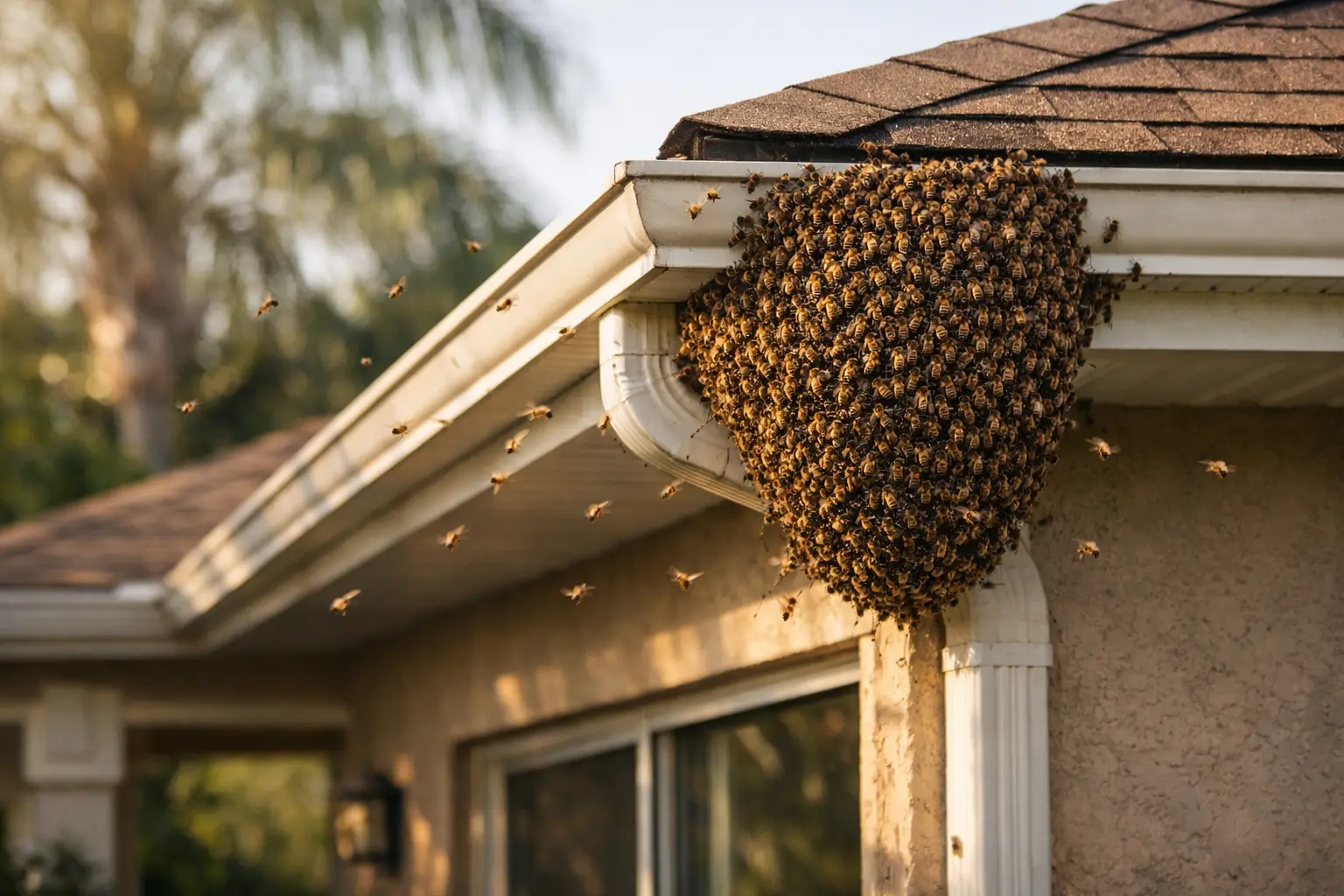

A honey bee colony in a soffit, wall, roofline, or utility box creates two concerns at once: public safety and property damage. That is why the answer to are honey bees protected in Florida is more nuanced than a simple yes or no. Florida recognizes honey bees as valuable agricultural pollinators and regulates beekeeping, but that does not mean a colony inside a home must be left in place.
For homeowners, property managers, and community leaders, the practical rule is this: honey bees should be handled responsibly, but an established colony that creates a safety or structural risk can and should be professionally removed. The most effective option is usually live removal and relocation, followed by complete cleanup and repair of the entry point.
Are Honey Bees Protected in Florida by Law?
Honey bees are not protected in Florida in the same way as a federally listed endangered species. There is no statewide rule that prohibits a property owner from addressing a honey bee colony on private property, especially when bees have established themselves in a building or are creating a legitimate safety concern.
However, Florida treats beekeeping as an agricultural activity. The Florida Department of Agriculture and Consumer Services regulates managed honey bee colonies, apiary registration, movement of colonies, certain bee diseases, and queen breeding. These rules support a healthy beekeeping industry and help limit the spread of pests and diseases that can harm Florida’s pollinators.
That distinction matters. A registered beekeeper’s managed hives are agricultural livestock and are subject to state apiary regulations. A colony that has moved into a wall cavity is not automatically untouchable simply because it is made up of honey bees. The colony still needs to be managed safely, with consideration for people, pets, neighboring properties, and the structure itself.
Honey Bees Are Valuable, but They Are Not Always Safe in a Building
Honey bees play a meaningful role in Florida agriculture and local ecosystems. They pollinate crops, produce honey, and support beekeepers whose work contributes to the state’s food system. Saving a viable colony when possible is a practical conservation choice.
Still, a colony inside a structure is not the same as a hive sitting in a properly maintained apiary. Once bees occupy a wall, attic, chimney, soffit, shed, or roof, they begin building comb and storing honey. Over time, the colony can grow substantially. A small entrance hole may lead to thousands of bees and many pounds of wax, brood, pollen, and honey hidden behind drywall or siding.
Leaving that colony in place can create serious consequences. Honey may leak when comb melts in Florida heat. Wax and honey can attract ants, roaches, beetles, rodents, and other pests. Moisture and staining can damage finishes. If the colony dies after a pesticide treatment, the remaining honeycomb can continue causing trouble long after the bees are gone.
There is also a safety issue. Honey bees are generally defensive near their nest, not aggressive without cause. But a colony in a high-traffic location can react when people mow nearby, use loud equipment, block a flight path, or accidentally disturb the nest. That risk deserves prompt attention near doors, walkways, pool areas, playgrounds, outdoor dining spaces, and shared commercial facilities.
What Florida Rules Mean for Property Owners
Florida’s bee regulations focus heavily on responsible beekeeping and colony health. Property owners do not need to become beekeeping experts before taking action, but they should avoid methods that create a larger hazard.
For example, spraying an exposed swarm may kill bees unnecessarily. Spraying into a wall opening is often worse. The treatment may not reach the entire colony, especially the queen. Surviving bees can relocate deeper into the structure, while dead bees, honey, and comb remain behind. The opening may also stay accessible to another swarm.
A proper structural removal addresses the full problem: bees, comb, honey, entry points, and the conditions that could invite a new colony. This is why removal is more involved than simply making the bees disappear from view.
Florida also has a history of Africanized honey bee presence. Africanized bees look much like European honey bees, and visual identification from a distance is unreliable. Some colonies can be more defensive, especially when disturbed. Homeowners should not attempt to open walls, plug entrances, smoke a colony, or use household insecticides around a nest.
If bees are acting defensively, are clustered near a public area, or are entering a building, keep people and pets away from the location. Do not stand in the bees’ flight path or throw objects at the nest. A qualified bee removal professional can assess the situation and choose a safer method.
Swarm Removal and Colony Removal Are Different Jobs
A swarm is a temporary cluster of bees, often hanging from a branch, fence, mailbox, or exterior wall. Swarming is how honey bee colonies reproduce. The bees may pause there while scout bees search for a permanent nesting site.
Because a swarm has not yet built comb or stored honey, it is often the easiest opportunity for live relocation. A calm swarm may move on by itself, but waiting is not always wise when it is near children, entrances, businesses, or public spaces. A beekeeper or live bee removal specialist may be able to collect and relocate it before it enters a structure.
An established colony is different. If bees are consistently flying in and out of one gap in a wall, roof, soffit, or utility structure for days or weeks, they are likely already inside. Pollen entering the opening is another sign that the colony is raising brood. At that point, the job requires more than swarm collection.
A complete removal may involve carefully opening a limited section of the affected structure, removing the bees and comb, collecting honey residue, and sealing the original access point after the bees are out. The trade-off is that structural access can involve repair work. But leaving contaminated comb behind can create recurring damage that costs more later.
Why Relocation Is Often the Better First Choice
Live removal and relocation are not required in every situation, and safety comes first. Yet when a colony can be safely recovered, relocation offers a better outcome than routine extermination. The bees can be moved to a managed apiary, where they can continue pollinating and producing honey under proper care.
This approach also solves the property problem more completely when the removal includes comb extraction and exclusion work. It protects the building, reduces the chance of reinfestation, and avoids leaving decaying bee material and honey hidden in a cavity.
For Southwest Florida property owners, fast action matters because heat, rain, and year-round forage allow colonies to establish quickly. Beeswild uses live removal and relocation as part of its bee-farm operation, giving recovered colonies a permanent destination rather than treating them as disposable pests.
When Removal Should Happen Quickly
Not every bee sighting is an emergency. A few bees visiting flowers are doing what bees should do and do not need removal. A distant swarm in a low-traffic area may allow time for a professional assessment.
Prompt help is warranted when bees are entering a structure, nesting near an occupied doorway, gathering around a pool or outdoor work area, or behaving defensively. Commercial properties and HOAs should also act quickly when a colony is near shared spaces. The issue is not only the chance of a sting. It is the responsibility to protect residents, employees, visitors, and the building itself.
People with known severe bee-sting allergies should treat a nearby colony with extra caution. Do not try to determine whether the bees are honey bees, wasps, or another stinging insect by getting closer. A professional can identify the situation from a safe distance and recommend the appropriate response.
A Responsible Path Forward for Florida Properties
Florida supports beekeeping and benefits from healthy honey bee populations, but responsible protection does not mean allowing a colony to damage a home or endanger people. It means choosing a method that respects the value of bees while resolving the real problem at the property.
If a colony has moved into your structure, avoid poison, do not seal the entrance while bees are active, and do not assume the issue will disappear on its own. A careful live removal can protect the people using the property, preserve a viable colony when conditions allow, and keep honeycomb from becoming tomorrow’s repair bill.

No responses yet