
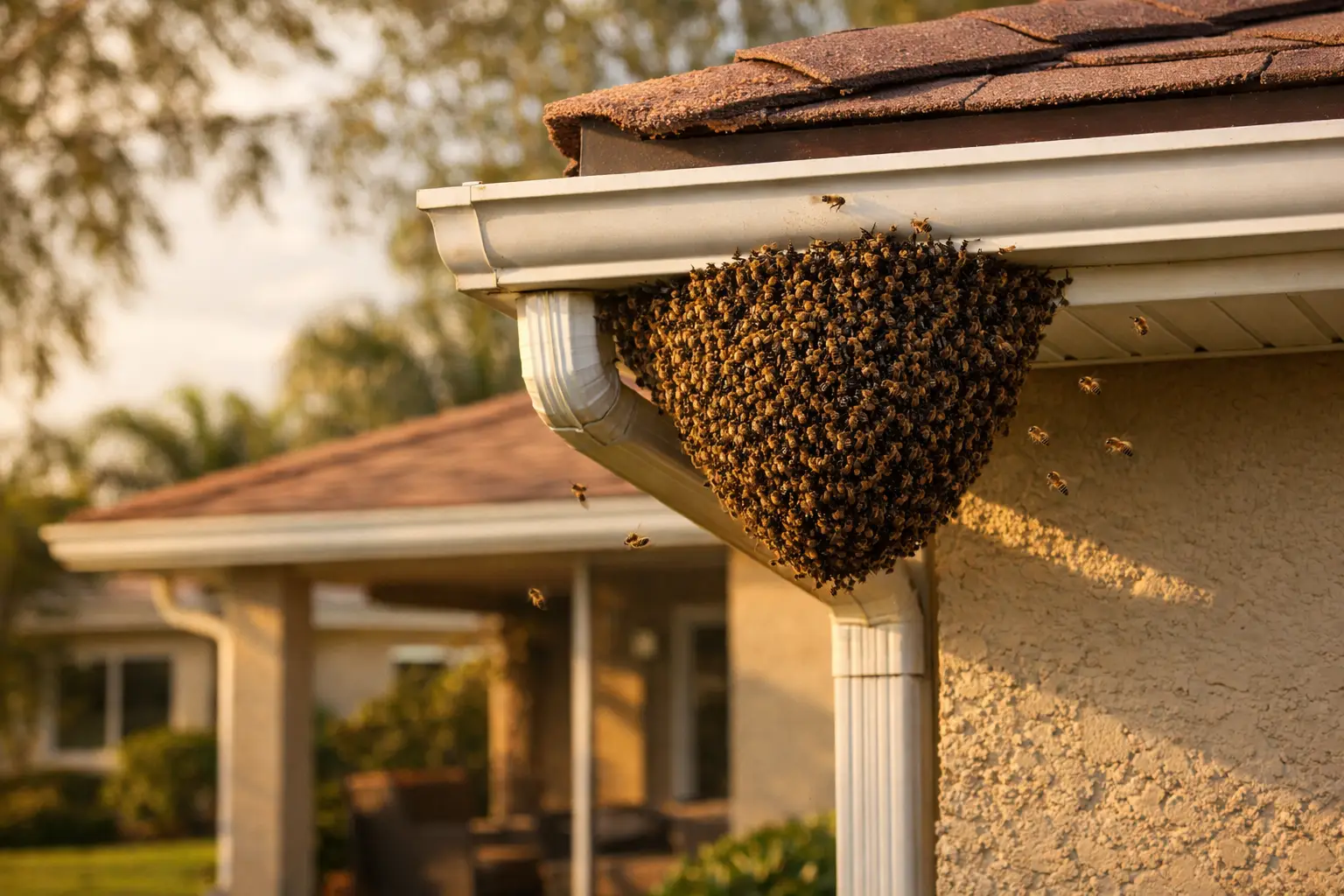

A bee colony in a soffit, wall, roofline, or utility box can feel urgent because it is. The safest way to prepare home for bee removal is not to confront the bees or seal them inside. It is to give the colony space, protect the people and animals around it, and make it possible for a trained live-removal crew to reach the nest safely.
Bees are valuable pollinators, but a colony living inside a structure creates practical risks. Honey and wax left behind can melt, stain ceilings, attract ants and roaches, or draw a new swarm to the same cavity. A proper removal addresses both the bees and the material they have built. Your preparation can make that work safer, faster, and less disruptive to your home.
Start With Distance, Not DIY Treatment
Once you see steady bee traffic entering one gap in a wall, soffit, roof, chimney area, or tree cavity, treat that spot as an active work zone. Do not stand in the bees’ flight path to inspect it closely. Do not tap the wall, spray the opening with water, smoke, household chemicals, foam, or insecticide, and do not try to seal the entrance.
Sealing an active colony is one of the most common and costly mistakes. The bees may find another route into the building, and honeycomb, brood, honey, and dead bees remain in the cavity. Even if the activity outside seems to stop, the structural problem has not been resolved.
Keep children, guests, and pets away from the immediate area. If the colony is near a pool cage, patio, play space, doorway, or dog run, use the other side of the property until removal is complete. Avoid mowing, pressure washing, hedge trimming, or using loud equipment near the entrance. Vibrations and repeated disturbance can make any colony more defensive.
If bees are actively stinging people or animals, move everyone indoors or into a vehicle, close doors and windows, and call for professional help. Anyone showing signs of a severe allergic reaction, such as difficulty breathing, swelling of the throat or face, fainting, or widespread hives, needs emergency medical attention immediately.
Identify What You Are Seeing From a Safe Distance
A swarm and an established colony require different responses. A swarm is a temporary cluster of bees, often hanging from a branch, fence, or exterior surface. It may look alarming, but it usually has no honeycomb yet and may move on within a day or two. An established colony has regular in-and-out flight activity at one opening, typically from morning through late afternoon on warm days.
From a safe distance, note where the bees are entering and whether the activity appears to come from a wall, roof, soffit, shed, tree, or another location. A few clear photos or a short video can help a removal professional assess access needs before arriving. Do not climb a ladder for a better picture.
It is also useful to note when you first saw activity and whether you have noticed buzzing inside a wall, honey staining, a sweet odor, or bees inside the living space. These details can suggest that the colony has been present for some time. They are not a reason to open the wall yourself.
Do Not Assume All Bees Behave the Same Way
In Southwest Florida, colonies can vary widely in temperament. A calm-looking entrance does not guarantee that a colony will remain calm if its nest is disturbed. Professional removal teams use protective equipment and evaluate the situation on site rather than relying on appearance alone.
This is also why a homeowner should not attempt a trap-out, vacuum removal, or chemical treatment found online. Structural bee removal involves more than collecting visible bees. The comb must be located, removed when appropriate, and the space prepared to prevent repeat occupation.
Clear a Safe Work Area for the Removal Team
Live bee removal may require access to an attic, garage, side yard, roof edge, lanai, or interior wall. Before the appointment, make the route to the affected area as clear as reasonably possible. Move patio furniture, planters, grills, toys, stored boxes, vehicles, and other obstacles that would interfere with ladders or equipment.
If the entrance is near a gate, make sure it can be opened. Let the crew know about locked fences, steep terrain, fragile landscaping, pool enclosures, security cameras, sprinkler schedules, or narrow side yards. If access requires someone to be home, arrange for an adult who can authorize entry and answer questions about the property.
For an attic removal, create a clear path to the attic access and move stored belongings away from the opening. For an interior-wall removal, take down artwork and move furniture several feet from the work area. Covering nearby furniture may be helpful, but ask the removal professional whether they prefer you to do so. Some jobs need a clean, open area rather than extra coverings that can get in the way.
Keep garage doors closed unless the crew asks otherwise. Close nearby windows and turn off window air-conditioning units that draw outside air near the colony. If bees have found their way indoors, close the room door if possible and avoid swatting. A professional can advise you on the safest next step.
Plan for Children, Pets, and Sensitive Neighbors
The day of removal is not the time for children or pets to watch from a few feet away. Arrange for them to stay inside, visit a neighbor, or remain in a separate part of the property well away from the work zone. Dogs are especially likely to bark at activity and run toward a disturbed colony, so use a secure indoor room or a crate if that is part of their normal routine.
Tell household members where the work will occur and which entrances should not be used. If the removal is near a shared fence, walkway, or commercial entrance, alert nearby neighbors, tenants, or staff when appropriate. The message can be simple: professional bee removal is scheduled, and people should avoid the marked area until the work is complete.
For HOA, retail, and multifamily properties, temporary cones, signs, or a controlled pedestrian route may be necessary. The exact setup depends on the colony location and public access. The goal is not to create alarm. It is to avoid a preventable encounter while trained professionals work.
Understand What a Complete Removal May Involve
A humane structural removal is often more involved than picking up a visible cluster. The crew may need to open a limited section of siding, soffit, wall, or ceiling to access the colony. They remove or relocate the bees, take out comb and honey, clean the cavity as needed, and address entry points after the bees are no longer using them.
There is a trade-off here: the smallest possible opening is desirable, but leaving comb behind can create more expensive damage later. A reputable professional should explain the anticipated access point, what materials may need repair afterward, and who is responsible for finishing cosmetic repairs such as drywall, paint, trim, or roofing.
Ask whether the service includes removal of honeycomb and whether there is a same-location warranty. A warranty matters because bees are attracted to residual scent and previously occupied cavities. At Beeswild, live removals include a three-month same-place-removal warranty, which reflects the importance of treating the location rather than simply dispersing the visible bees.
Prepare for Some Normal Activity Afterward
After removal, a small number of foraging bees may return to the former entrance for a short period. This does not automatically mean the colony remains. These bees were away collecting nectar when the main colony was removed and may need time to disperse.
Follow the crew’s instructions about when to reopen the area, restore patio furniture, or schedule repairs. If you notice sustained flight activity days later, new bees entering the cavity, honey leaking, or an unexpected increase in indoor bees, document it from a safe distance and contact the removal provider.
Make Future Nesting Less Likely
Once the colony has been removed and the repair timing is appropriate, inspect the exterior for gaps around soffits, fascia boards, vents, pipe penetrations, eaves, and utility openings. Bees can use surprisingly small voids, especially where weathering has loosened a screen or created a gap at a joint.
Exclusion should happen after removal, not before. Seal openings with suitable building materials, repair damaged screens, and keep exterior wood and trim in good condition. If a cavity is known to have housed bees, confirm that comb has been removed before it is closed. This protects your structure while reducing the chance that another colony will choose the same address.
A calm, prepared property gives bees their best chance of safe relocation and gives your home the best chance of a clean resolution. Stay back, keep access clear, and let the removal process deal with the part you cannot see inside the wall.

No responses yet